Fixing Bottlenecks in Lead Pipe Funding: Minimum Allotment Requirements
Explore the funding challenges and policy solutions for lead service line replacement (LSLR) under the Infrastructure Investment and Jobs Act (IIJA). Learn minimum allotment requirements for SRF funding impact the flow of LSLR funding and what reforms could speed up getting the lead out.
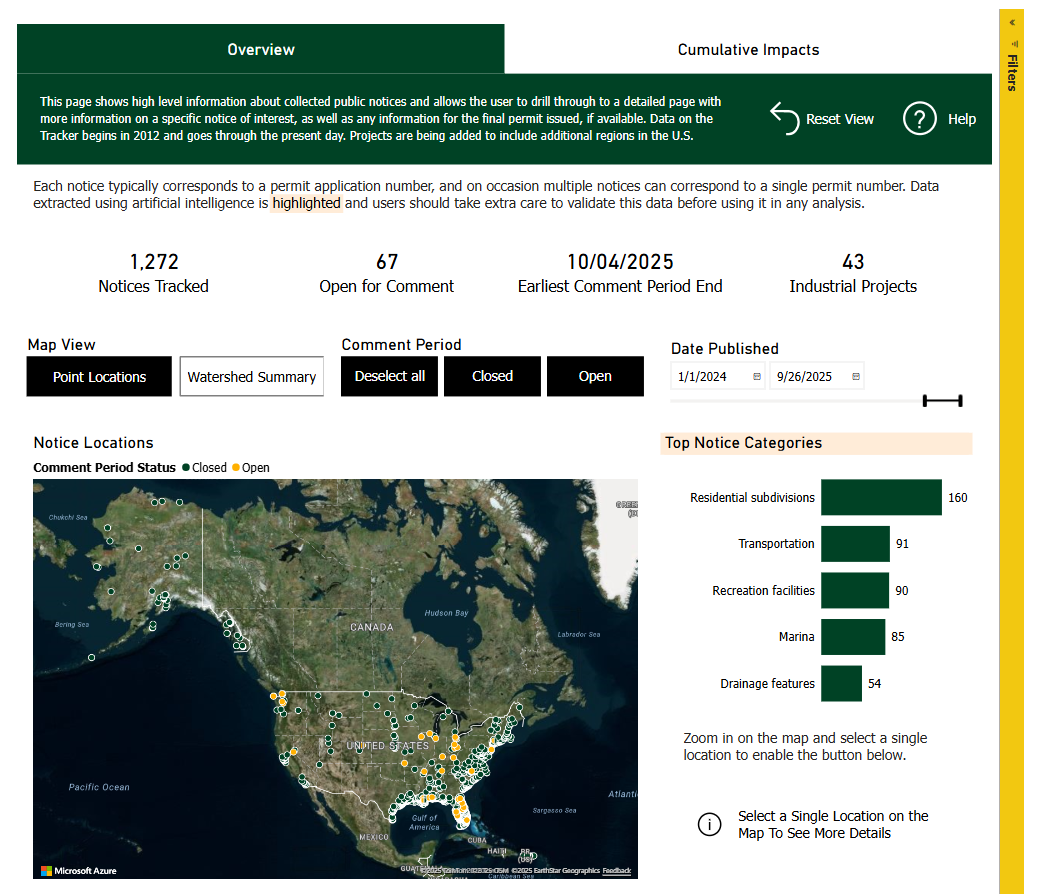
Expanding our Understanding of Wetlands: Nation-wide Updates to the Wetlands Impact Tracker

Endless Prairie Buffalo Project: The restoration of a cultural and ecological keystone species.

Empowering Our Forest Stewards: A New Era of Innovation

4 Pillars for Permitting Innovation
The permitting reform space is growing fast, and there are clearly different philosophies for why this work is important, what values should guide us in identifying solutions, whether reform is even needed, and how we build a large enough coalition to make meaningful changes at all levels of government.

Chesapeake Pay for Success is a Success: How state water quality program design can drive cost-effectiveness

Thoughts on the ESA Amendments Act of 2025

Predicting DOGE AI Deregulatory Tool Recommendations

State SRF Policies: Dispatches From Our Water Webinar Series

California’s New Trailer Bill Is a Game-Changer for Environmental Contracts

Reimagining Forestry in the Digital Age: An Invitation to the Old Guard and the Next Generation

Utilizing EPIC Resources to Strengthen Texas SRF Analysis

Updates to our Permitting Tools Inventory

Fixing Bottlenecks in Lead Pipe Funding

Forbes Announces Jessie Mahr as Global Sustainability Leader!
Identificación, Monitoreo, y Evaluación de la Adicionalidad en los Bancos de Hábitat
Identification, Monitoring and Evaluation of Additionality in Habitat Banks
Texas SFY26 Public Comments: Drinking Water State Revolving Fund General Activities Intended Use Plan

Beyond Principal Forgiveness: Interest Rate Policies for SRF Loans
This blog discusses and demonstrates how targeted interest rate reductions can deliver affordability benefits comparable to Principal Forgiveness while preserving the revolving capacity of the SRF loan fund to the same degree.