In this issue: Indigenous-led restoration, new research on wetland protections, and innovative approaches to delivering better environmental outcomes.
Subscribe to get the latest delivered straight to your inbox.
U.S. Restoration in a Global Context
My recent trip to Mongolia to attend the UN Conference to Combat Desertification gave me the chance to reflect on how our U.S. restoration policies and approaches compare with international examples. Talking with practitioners from every continent except Antarctica, I found myself reflecting on where the U.S. stands: a genuine trailblazer in nature protections, we are still working through persistent procedural and financing barriers to restoration.
Back home, our team at EPIC researches what restoration strategies are actually working, and why, so we can do more of them. The U.S. hosts one of the largest, most well-studied environmental markets in the world: the $4 billion-a-year compensatory mitigation market. With five years of outcomes-based procurement behind us, we can now measure just how cost- and time-efficient alternative contracting can be for clean water. Meanwhile, Tribes are bringing back bison herds and running plant nurseries that are building climate resilience in pine forests — restoring ecosystems and relationships that have endured for generations.
This newsletter issue features more on these success stories. We also delve into new research revealing where better policy could help restoration move quickly and deliver more resilient outcomes. Read on, and join the conversation with us on LinkedIn or reach out to me directly.
What Indigenous-Led Restoration Can Teach Us About Building Resilience
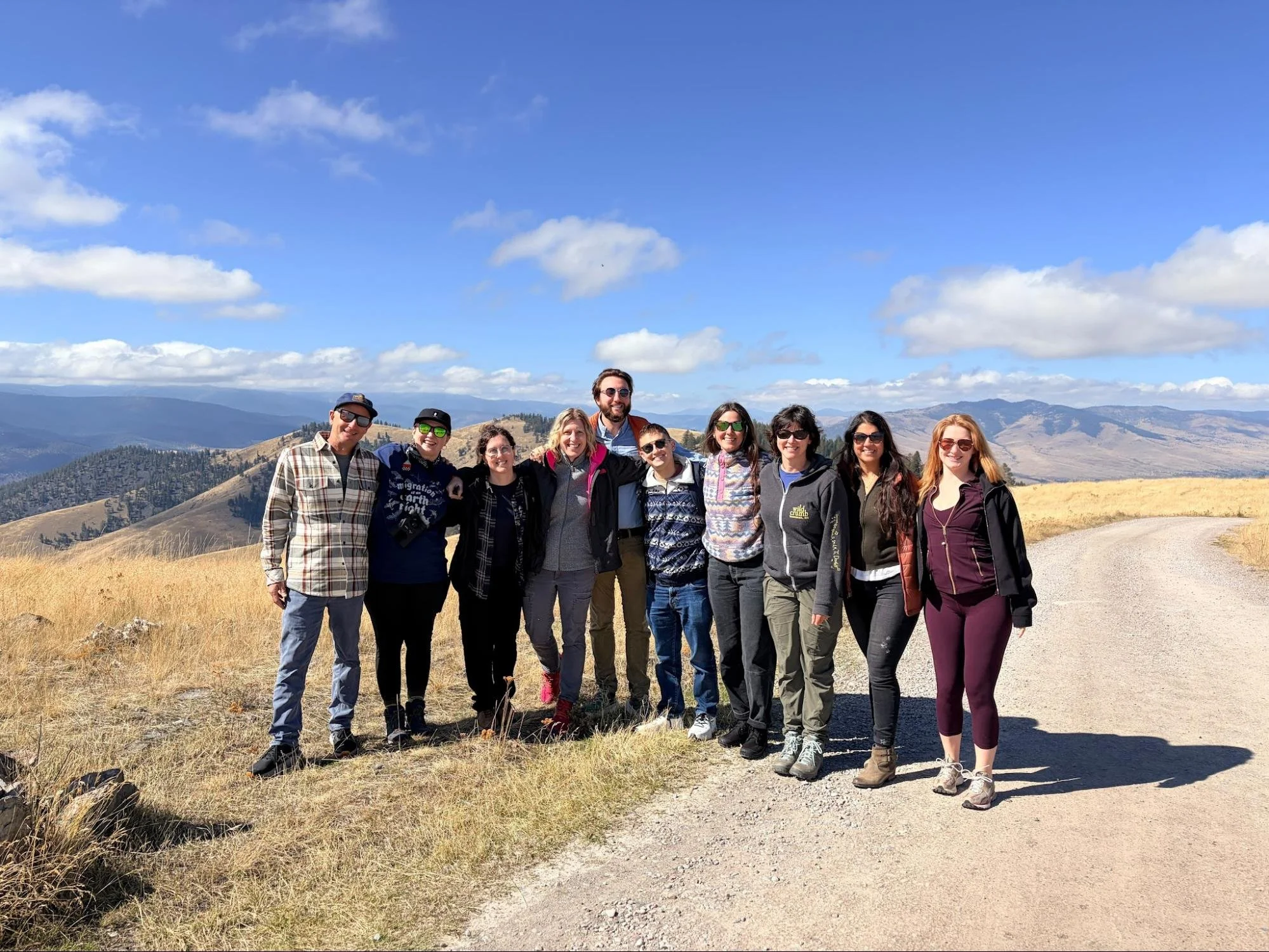
What does Indigenous-led restoration look like in practice? At our September team retreat on the Flathead Reservation in Montana, EPIC’s Restoration Team saw how the Confederated Salish and Kootenai Tribes (CSKT) connect ecological stewardship with cultural heritage, community resilience, and economic opportunity.
Over two days, we toured the 18,766-acre CSKT Bison Range, learned how the Tribes pioneered wildlife crossings along U.S. Highway 93, and visited the CSKT Greenhouse and Restoration Nursery. There, we heard about efforts to conserve culturally significant whitebark pine, including climbing mature trees to collect seed from resilient individuals for future generations. An expanding nursery is also increasing capacity to grow native plants for restoration and exploring opportunities to support food security for Tribes nationally.
We came away with a deeper appreciation for the breadth of Indigenous-led stewardship, from wildlife and habitat connectivity to native plant propagation, infrastructure, and community development.
One message particularly resonated with our team. A CSKT Tribal Member who shared insights into the Tribes’ forest restoration work described how restoring natural resources contributes to her own healing and that of her community. It was a powerful reminder that restoration is about more than ecological outcomes: healthy landscapes and healthy communities are interconnected.
Read more about the team’s time exploring Tribal restoration work on the Flathead Reservation here.
What Happens When 3,000 Acres of Wetlands Lose Federal Permit Requirements?
By Becca Madsen
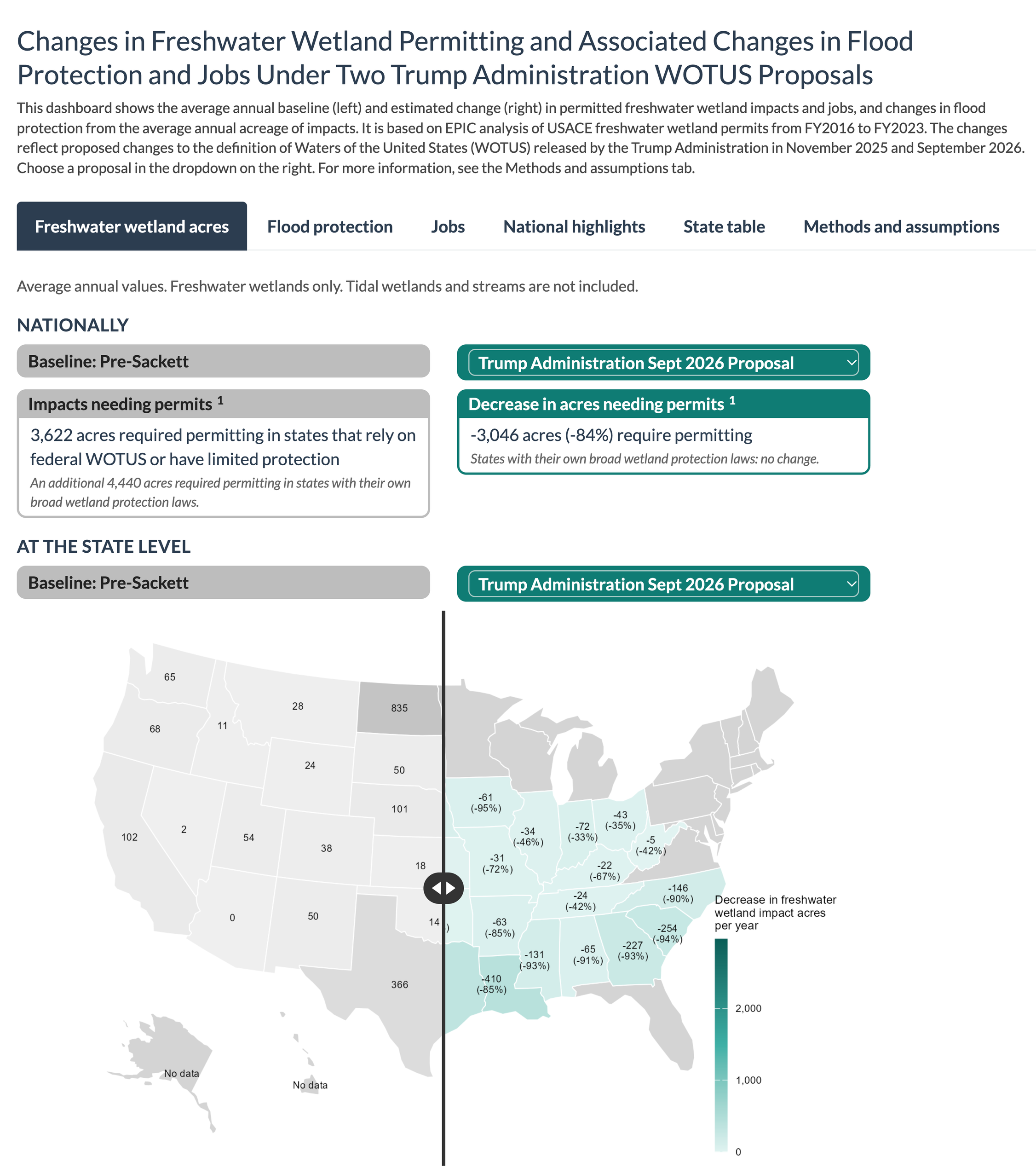
Wetlands soak up floodwater, filter pollutants, and provide habitat. When a project like a road or housing project fills a wetland, a federal permit requires the developer to restore wetlands elsewhere to make up for the loss. Proposed changes to the definition of “waters of the United States” (WOTUS) would remove that requirement for many wetlands. Policymakers and communities need to know what that means on the ground, and our new dashboard provides an estimate.
While previous research estimated changes at the landscape level (e.g., the location and % amount of aquatic resources that could lose protection), we wanted to know how changes to WOTUS would play out in actual permit decisions. So we applied the Administration’s latest proposed definitions to past development projects, and checked whether they would now need US Army Corps of Engineers permits, for states with limited/no state wetland protection. And we created a dashboard to show changes to freshwater wetland impacts acreage, jobs, and flood protection. The data and research is out there, but no one has put it together (not even the agencies in charge). The changes we found?
Acres of freshwater wetland impacts: 3,000+ acres/yr would no longer need a permit
Jobs tied to compensatory mitigation that used to go along with those permits: potential loss of 3,400+ jobs
Increased flood damages / insurance payouts associated with losing wetlands: $8M-$27M of flood protection lost over 50 years from just one year of impacts that no longer need permitting
We would love to extend the dashboard to cover streams, refine flood values, and seek peer review. Please contact us if you can support this work.
The Same Conservation Dollars Could Deliver 55% More Pollution Reduction

Are water quality improvements more cost-effective when generated by paying farmers to adopt conservation practices (pay-for-practice), or when generated by paying them for quantified environmental results (pay-for-outcomes)?
Recent research from EPIC, RES, and the University of Wisconsin, funded by a USDA Conservation Innovation Grant, answered this question by comparing the cost of a pound of phosphorus credit traded on the Wisconsin Clearinghouse to the cost to generate the same phosphorus runoff reductions via the federal government’s flagship practice-based program, the Environmental Quality Incentives Program (EQIP).
Our research finds that the outcomes-based approach costs 35% less per pound than paying farmers a flat rate to install a practice. Across the six leading cropland practices examined, EQIP paid an average of $54.47 per pound of phosphorus reduced. Wisconsin's trading program delivers the same reduction for a volume-weighted mean of $35.18 per pound, even though the trading figure also carries design, outreach, and verification costs that the EQIP figure does not. In 2024, USDA Natural Resources Conservation Service (NRCS) spent $6.5 million on those six practices, preventing about 119,000 pounds of phosphorus from entering waterways. But if that same amount of funding were routed through Wisconsin's Water Quality Trading Clearinghouse at the observed price instead, it could have achieved 55% more phosphorus reduction (185,000 pounds).
Going forward, we recommend NRCS purchase verified phosphorus reductions directly through the Clearinghouse, which could achieve significantly more environmental outcomes than through cost-share. This could be done immediately under a Regional Conservation Partnership Program alternative funding arrangement. Longer term, USDA and Congress could build a dedicated program to purchase water-quality outcomes through Commodity Credit Corporation authorities, a National Outcomes Bank. These innovations in conservation would cut cost per pound and ease the paperwork burden on a shrinking agency staff.
Why America's Aging Road Crossings Need a Different Design Standard
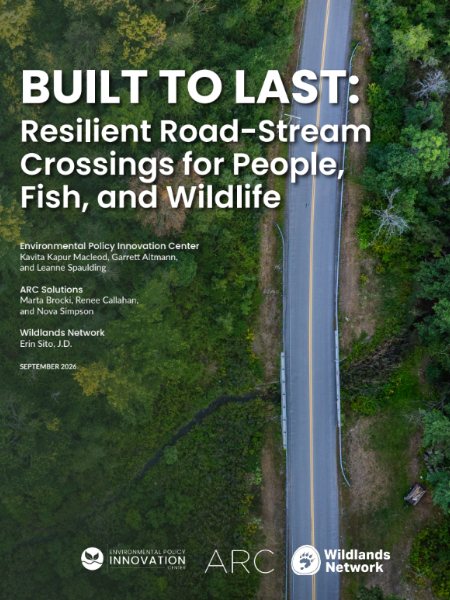
Built to Last: Resilient Road-Stream Crossings for People, Fish, and Wildlife is the culmination of work by EPIC, ARC Solutions, and Wildlands Network, funded by the Pew Charitable Trusts to examine the opportunities and barriers to designing high-quality road-stream crossings that achieve resilience, wildlife passage, and human safety. It lays out the case for adopting an integrated design approach that can empower federal and state transportation, wildlife, and resilience agencies to transform single-purpose crossing structures into durable public assets that deliver economic, social, and ecological value.
The paper addresses the challenge of over 60 million culverts and bridges that are aging and have not been designed to withstand changing weather patterns and storm events of today or the future, or for aquatic or terrestrial wildlife passage. The report illustrates the ways in which crossing structures are vulnerable to changing weather patterns, such as how more intense storms can cause flooding and failure of crossings that negatively impact people and communities by damaging property and cutting off road access. We conducted detailed design and policy research to showcase design options that lend resilience to these structures - like making them bigger to accommodate flows - and how design that considers fish and wildlife passage is a cost-effective addition to achieve multi-benefit integrated design. The report culminates in policy and design recommendations for states to consider in developing guidance and policy for integrated road-stream crossing design.
The project benefited immensely from the combined expertise of state transportation and wildlife staff who agreed to interviews with us, and from a Technical Advisory Panel (TAP) of experts in crossing design and project implementation who guided us and provided feedback throughout.
Deeper Dive
Another new tool and research paper we’re excited about:
What’s In the Senate Permitting Bill. Check out our Permitting Team’s Nikki Chiappa’s section-by-section guide to the Bipartisan American Affordability and Jobs Act of 2026. The guide takes over 400 pages of dense legislative text and transforms them into an easy-to-use dashboard you can search and filter by energy type, reform category, bill title, or committee.
Innovative Insurance for a Changing Climate. In this report, EPIC Coastal Restoration and Resilience Fellow Daisy Schadlich explores how insurance could help create financial incentives for investment in nature-based solutions while strengthening protection against climate hazards and weather-related disasters.