
2025 In Review: Restoration in Action
2025 was a consequential year for restoration policy! While federal agencies lost 25% or more of their staff and rescinded billions in funding, some state- and tribally-led efforts gained momentum. It affected our work in many ways, for example our efforts to advance financing solutions for land conservation was stymied by changing strategies on land acquisition by federal agencies.
Yet, from launching ground-breaking biodiversity credit pilots to unlocking new pathways for outcomes-based contracting, EPIC’s restoration team worked alongside partners across the country to make ecological restoration faster, fairer, and more effective in 2025. Our team authored, led, facilitated, or spoke as subject matter experts at 84 events, publications, and other platforms this year – including 10 blog posts, 43 conferences, 16 publications, 3 webinars, and 12 comment letters. The real story isn’t only in the numbers though. It’s in the policy shifts, the partnerships forged, and the pioneering projects demonstrating a new model for restoration outcomes.
Funding Environmental Outcomes, Not Just Activities
EPIC’s conservation finance work aims to fundamentally transform how governments pay for restoration by shifting from low-accountability activity-based contracts to performance-based models that deliver measurable results. In 2025, our restoration team made significant progress toward that vision.
California became the latest state to encourage outcome contracting. The legislature passed SB 124, authorizing the Department of Water Resources to use outcomes-based contracts for critical habitat restoration. This tiny but mighty bill allows California to tie payments of contracts to measurable outcomes and performance thresholds versus activities like planting and grading. This new authority builds on the success of projects like the Lookout Slough Tidal Habitat Restoration, the largest tidal wetland restoration project in California’s Delta region, which was successfully achieved through a Pay for Success contract.
And California is not alone in undertaking such innovation; other states are embracing outcomes-based contracting too. Across the Chesapeake Bay region, Pay for Success programs are successfully delivering verified nitrogen reductions and at lower costs than traditional methods. Maryland, Pennsylvania, Virginia, and the Susquehanna River Basin Commission are paying for verified pounds of nitrogen reduced within the watershed, versus simply paying for better practices. EPIC staff conducted an in-depth analysis of five existing nitrogen reduction programs, examining cost data, timelines, and contract structures to identify best practices that other states can adopt. During 2025 our team helped six states develop, refine, or analyze Pay for Success programs.
These advancements represent foundational shifts in how the government invests in restoration outcomes and improves the environment more broadly. When risk-reward structures and adaptive management are integrated into public contracting mechanisms, new sources of capital unlock and accountability for delivering real environmental progress goes up.
Faster Permitting for Infrastructure
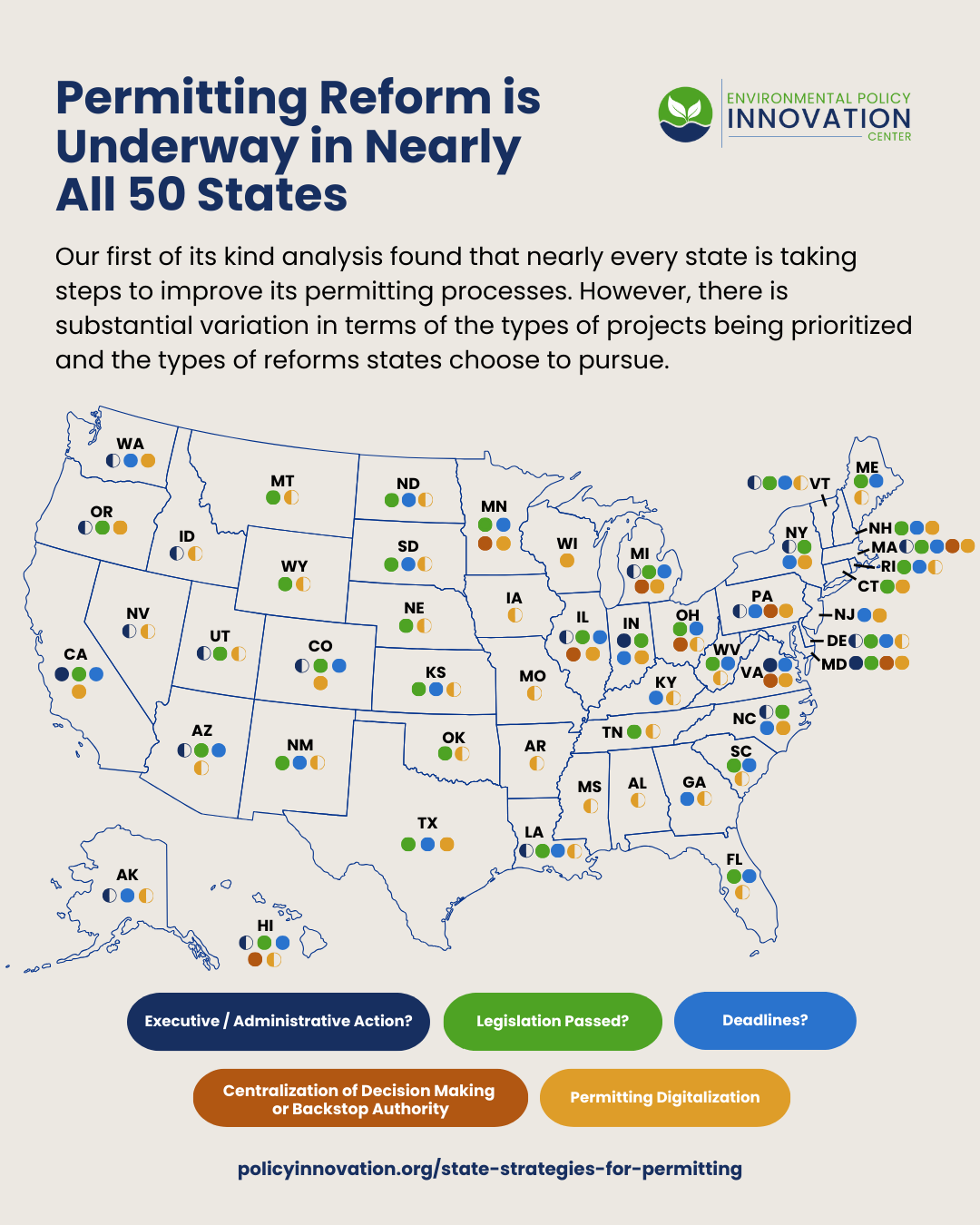
Our permitting work aims to make the permitting process faster, more efficient, and straightforward. With permitting reform being one of the hottest topics on the Hill in 2025, EPIC ramped up our capacity to engage in permitting, in Washington, DC, and at the state level. We launched a Permitting Innovation Hub that brings together a multidisciplinary team from across EPIC with documented success in making permitting processes faster, fairer, and more effective.
Joining EPIC’s Permitting work in 2025 were Brent Efron, Senior Manager for Permitting Innovation, who came to EPIC from the EPA’s Office of the Administrator where he was Special Advisor for Implementation, and Boon Sheridan, Permitting Tech Lead, who joined from 18F, the federal government’s former digital service agency. Together, they collaborated on a first-of-its-kind landscape analysis of state-level permitting reform efforts. The analysis examined five categories of reform activities and highlighted strategies that work.
In addition, EPIC’s permitting team is working to build relationships between infrastructure permitting and environmental organizations in DC and beyond, to ensure that environmentalists are engaging in the process of bringing about meaningful permitting reform.
Smart Permitting for Ecological Restoration
Building on our vision for faster permitting, EPIC’s restoration team launched the Smart Permitting for Ecological Restoration webpage, which offers resources and case studies to help restoration practitioners, regulators, and policymakers learn about different ways they can improve permitting to accelerate restoration projects—both voluntary restoration and compensatory mitigation. Our work is gaining momentum and recognition for its practical, solution-oriented insights. For example, we submitted detailed recommendations for the Army Corp’s national wetland permit revision process, many of which made it into revised permits that are used to authorize thousands of projects and mitigation actions every year.
2025 was a big year for developing strategic partnerships to advance restoration permitting reforms at the state and federal levels. Among other accomplishments, our team advised a New York research project identifying regulatory barriers to voluntary restoration, and contributed to a national coalition reforming FEMA’s No-Rise Rule that has delayed or prevented voluntary restoration projects. Overall, our restoration permitting staff covered a lot of ground to see restoration permitting reform conversations and actions advance across the country—we’re excited to see how our work continues to build and expand in 2026!
Working with Tribes
EPIC’s Nicole Stiffarm, Tribal Partnership Manager, wrote about how rapid changes early in 2025 led the federal government to retreat from many trust responsibilities to tribes.
A core part of EPIC’s work is making federal funding and resources more accessible to Tribes and low-resource communities. We strive to work on projects where ecological restoration and cultural restoration go hand-in-hand. A perfect example is work to launch a voluntary biodiversity credit pilot program in partnership with the Fort Peck Assiniboine and Sioux Tribes, private sector investors, and non-profit organizations. The program, the Endless Prairie Buffalo Project, is a two-year pilot to reintroduce wild buffalo to ancestral lands managed by the Fort Peck Assiniboine and Sioux Tribes in Montana. Each credit will correspond to the ecological restoration of roughly one acre of grassland ecosystem driven by the return of bison herds. The pilot, which was developed in partnership with Defenders of Wildlife and Kingfisher Parker, aims to provide a reliable measurement of the impact of bison reintroduction while generating revenue to support long-term herd management by the Tribes.
"This restoration project represents a significant step toward revitalizing both our ecosystem and our cultural heritage,” said Fort Peck Executive Board Chairman Justin Gray Hawk. “It's about creating a sustainable future for the buffalo and our community."
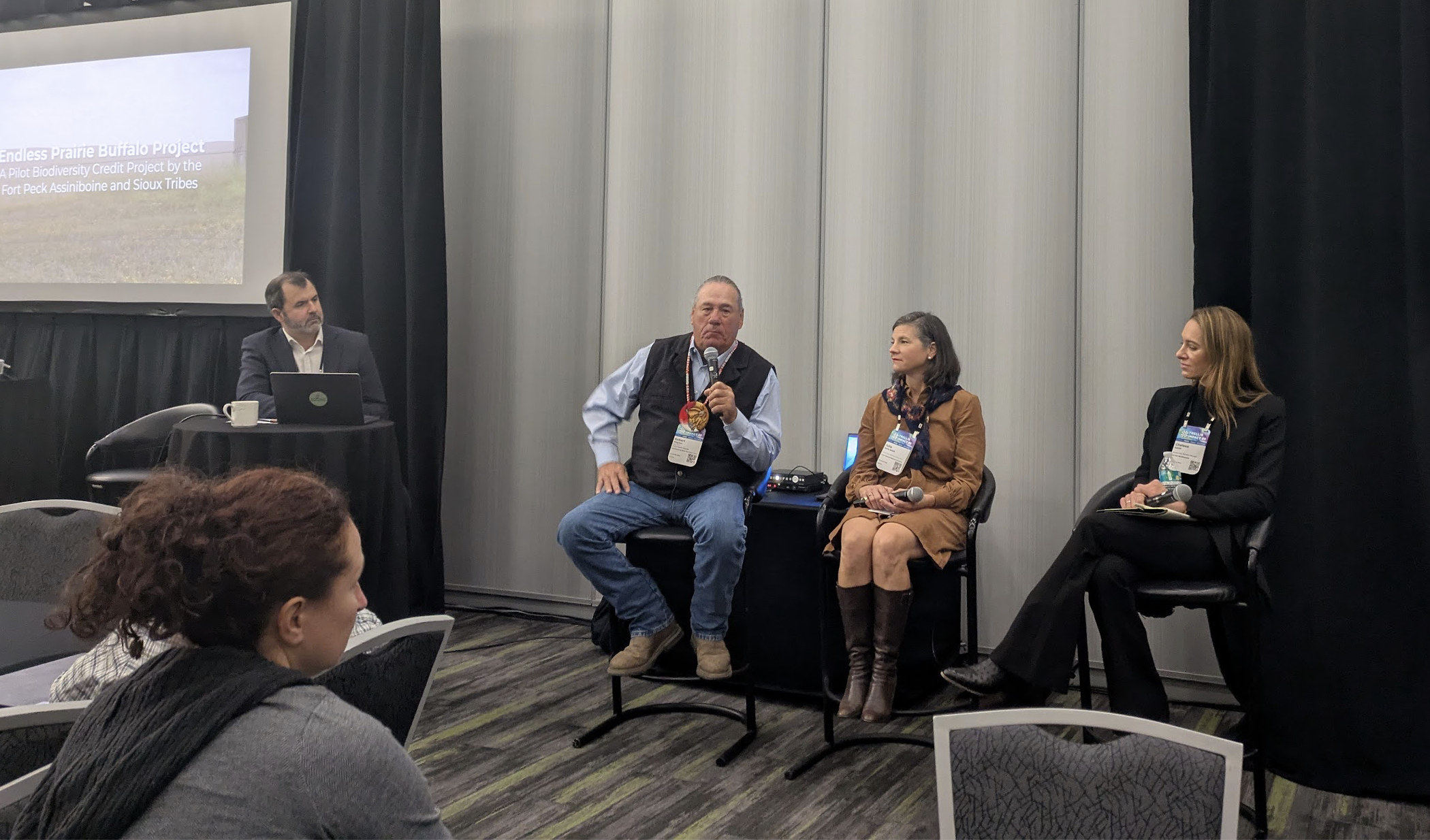
EPIC moderated a session that showcased this work at Bloom, the leading corporate biodiversity conference, held in San Jose, CA, in 2025
Improving Tribal Drinking Water Data
EPIC’s Tribal Legal Fellow and Technology team collaborated on a new Tribal data project. By evaluating publicly available datasets from the Environmental Protection Agency (EPA) and the Indian Health Service (IHS), the project revealed that current data is often inaccurate, difficult to access, and lacks definitional clarity regarding Tribal sovereignty and jurisdictional boundaries. These systemic data failures often lead to policy solutions that do not serve Tribal priorities, signaling a need for the federal government to better uphold its trust responsibility by providing accurate, useful, and consistent data tools. A report from the work documents this critical "data gap." In Tribal communities, nearly 50% of homes lack reliable water sources compared to only 1 percent of U.S. homes overall.
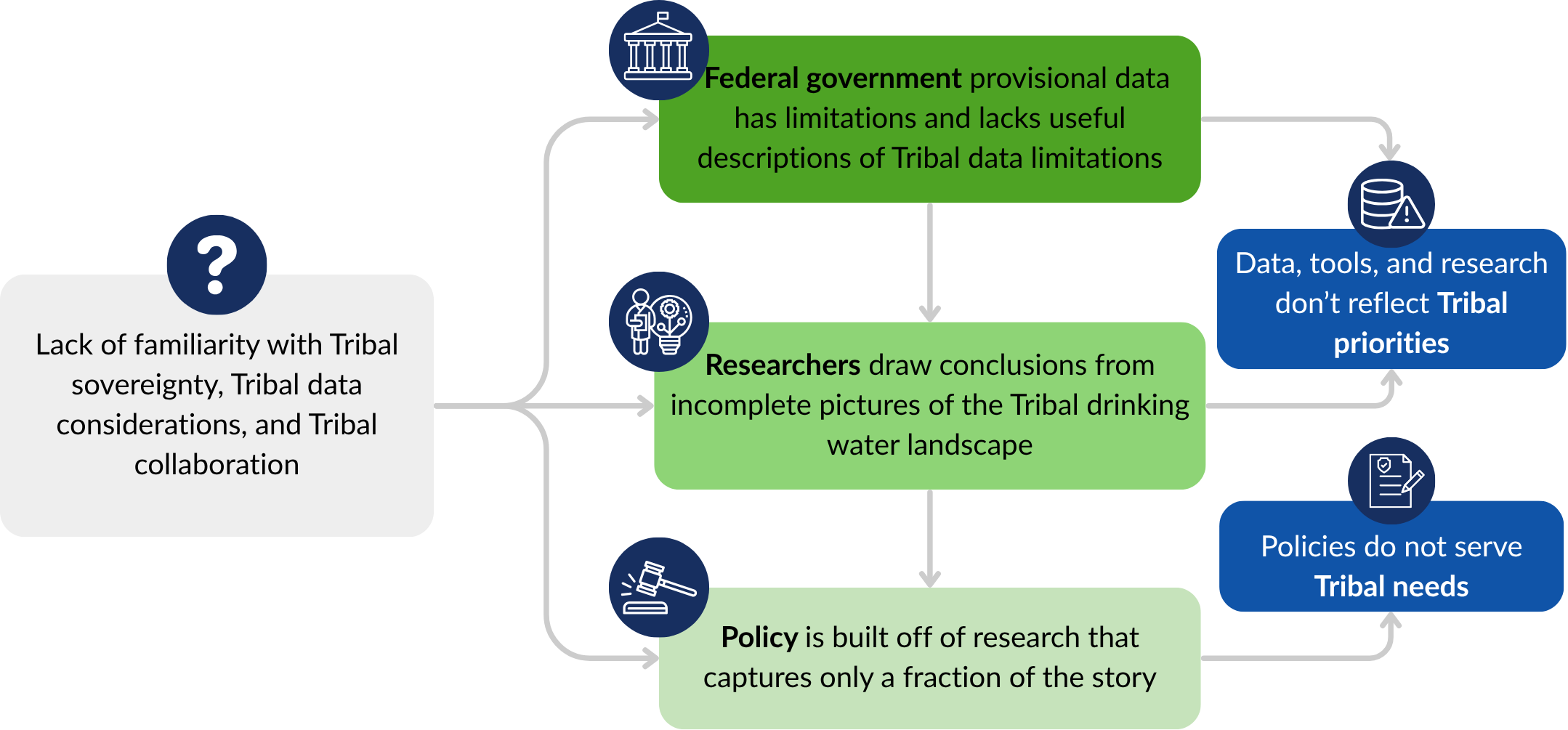
To bridge these gaps, our team developed a comprehensive resource detailing the state of Tribal water data and established a Tribal advisory council of over 20 experts to guide future research. Key achievements included updating 27 service area boundaries in Oregon, which improved data for over 1.5 million people (37% of the state’s population), and influencing the EPA to improve documentation for its Tribal drinking water data in five key areas. Furthermore, the project fostered partnerships with groups like the Great Plains Tribal Epidemiology Center to pair environmental data with public health information, creating a scalable model for regional data improvement that can be replicated nationally to ensure Tribes are no longer an "afterthought" in regulatory data and infrastructure planning. Learn more about this work in our webinar on Tribal water data.
Building Restoration Capacity Where It’s Needed Most
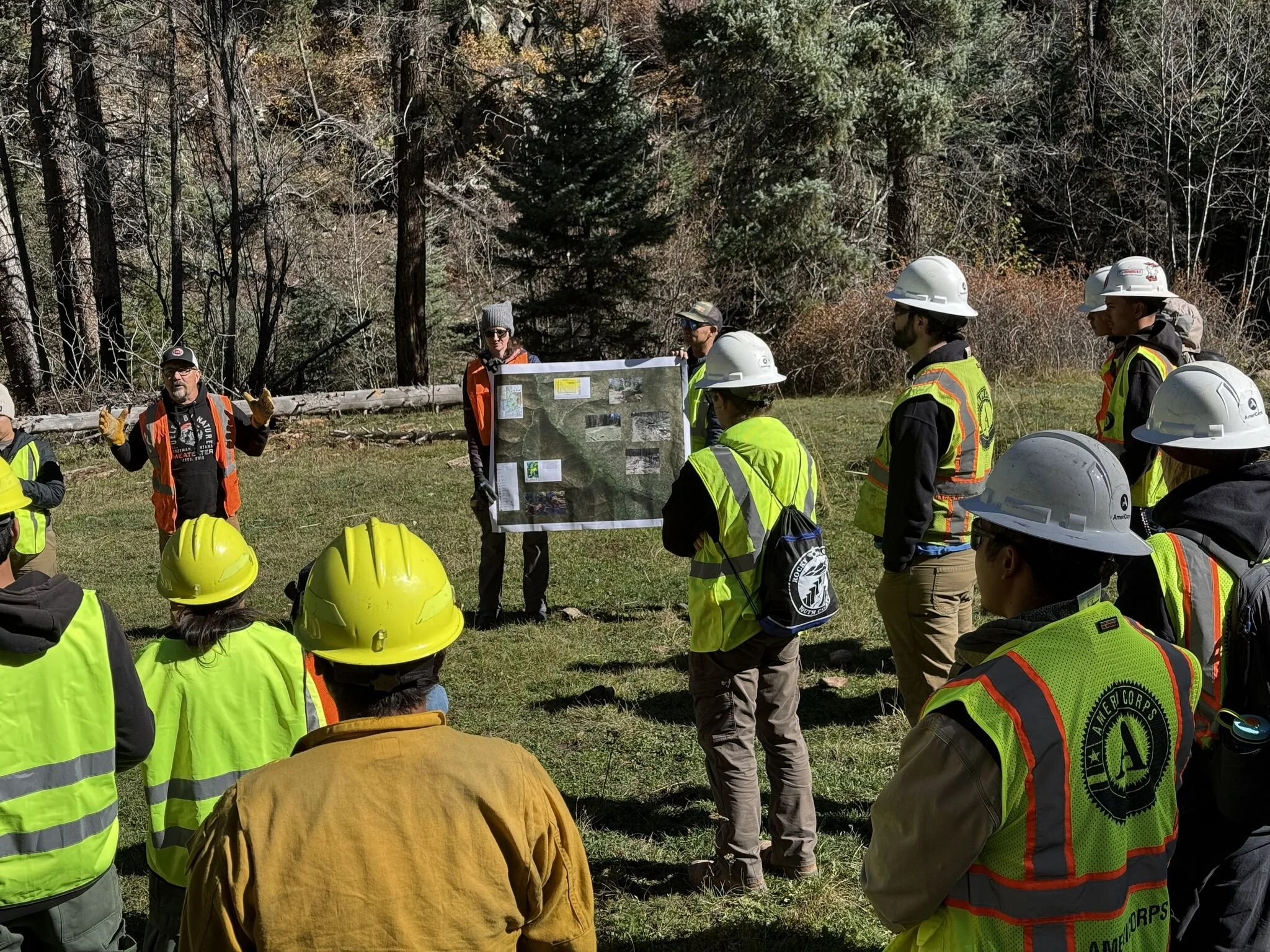
Policy changes and innovations cannot truly succeed without on-the-ground implementation capacity. That’s why EPIC’s Western Restoration Program Senior Manager teamed up with American Rivers and the Theodore Roosevelt Conservation Partnership to scale restoration capacity across large river basins, starting with the Upper Rio Grande. In late 2025, the team hosted their first Restoration Training Workshop on Pueblo of Tesuque and US Forest Service lands, bringing together 50-plus participants from seven Tribes and several youth conservation groups.
The two-day event covered stream restoration, post-fire sediment management, habitat assessment, and grazing mitigation with a focus on nature-based solutions and process-based restoration. The workshop exceeded expectations and represented a vital step forward for scaling workforce development and implementation capacity in under-resourced areas.

International Policy Engagement for Better Conservation Outcomes
Conservation challenges in the US are often shared by practitioners and policymakers elsewhere, which is why our biodiversity markets team is increasingly collaborating with and advising international partners. The success of US compensatory mitigation policy and similar models elsewhere provides a useful model for policy development and refinement, with direct engagement this year in both Colombia and Costa Rica. Through collaboration with EPIC partner Terrasos, our team consulted with government environmental agencies in Colombia on the evaluation of additionality in their compensatory offset program. Likewise, work with the Revenues for Nature program of the UK’s Green Finance Institute has supported the evaluation of ecological compensatory policy pathways for Costa Rica. Partnerships like these help ensure that emerging policy frameworks around biodiversity offsets and conservation outcomes are built on sound principles and best practices learned from the US and other countries' experiences, and help build practitioner networks and partnerships to create better outcomes for nature in the US and abroad.