
2025 In Review: Agriculture
Agriculture is the largest land use on the planet, so it's no wonder that governments spend billions of dollars every year to attempt to reduce its negative environmental impacts. Over the last year, EPIC’s Agriculture Program continued to dig deep into what can and should make these conservation programs dramatically more effective. We’ve designed and uplifted examples of successful outcomes-based conservation, evaluated and refined existing programs that pay for results, and our vision of a new future feels even closer– one where the structures that have made food in America so cheap and accessible are applied to produce cheaper and better environmental benefits too.
Pioneering Outcomes-Based Conservation with Federal Funds
In 2025, EPIC’s team was able to finally routinize payments to farmers in Maryland under our Regional Conservation Partnership Program award. We are partnering with the state-administered Clean Water Commerce program for five years to buy water quality outcomes across three farming focuses: oyster aquaculture, drainage water management, and precision nutrient application.
Through this program, EPIC directly prevented hundreds of pounds of deadzone-causing nitrogen from going into the Chesapeake Bay. Even more importantly, we proved that federal conservation funds can be used to pay directly for environmental outcomes.
More Effective and More Efficient?
We kicked off 2025 publishing an in-depth report on opportunities to administratively improve the Regional Conservation Partnership Program. As the only federal program currently paying for outcomes, it’s crucial we streamline this program to ensure it works as effectively as possible.
We worked with small NPDES permit holders in Wisconsin to collect data on their water quality trading market. This coming year, we’ll be able to compare the cost paid for phosphorus reductions through that market against the cost per pound that USDA is paying indirectly via its cost-share programs–potentially showing a more effective way to conduct conservation.
And on the RCPP front, we now have dozens of farms lined up to participate in 2026, and will come close to fully expending the $2.7 million award, which is slated to end in 2027.
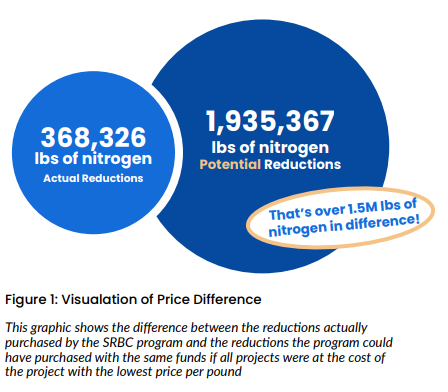
We also continued evaluating four of the five Chesapeake Bay Pay for Success programs. We found that these Pay for Success programs reliably reduce costs, and we identified administrative and legislative changes that could reduce them even more. Here’s a wild stat from that report: In one program, if all of their projects were as cost-effective as the lowest priced one, they could have had five times the benefit for the same total cost!
Looking Ahead: Abundance, the USDA, and Even More Farms.
Throughout the year, we found ourselves returning to an interesting, new question: how does EPIC’s vision for environmentally restorative agriculture fit within the burgeoning Abundance movement? We brought this question and our voices to the Abundance Conference in Washington D.C. and began building connections with promises for exploration. We’re looking forward to learning more and sharing more in the year to come!