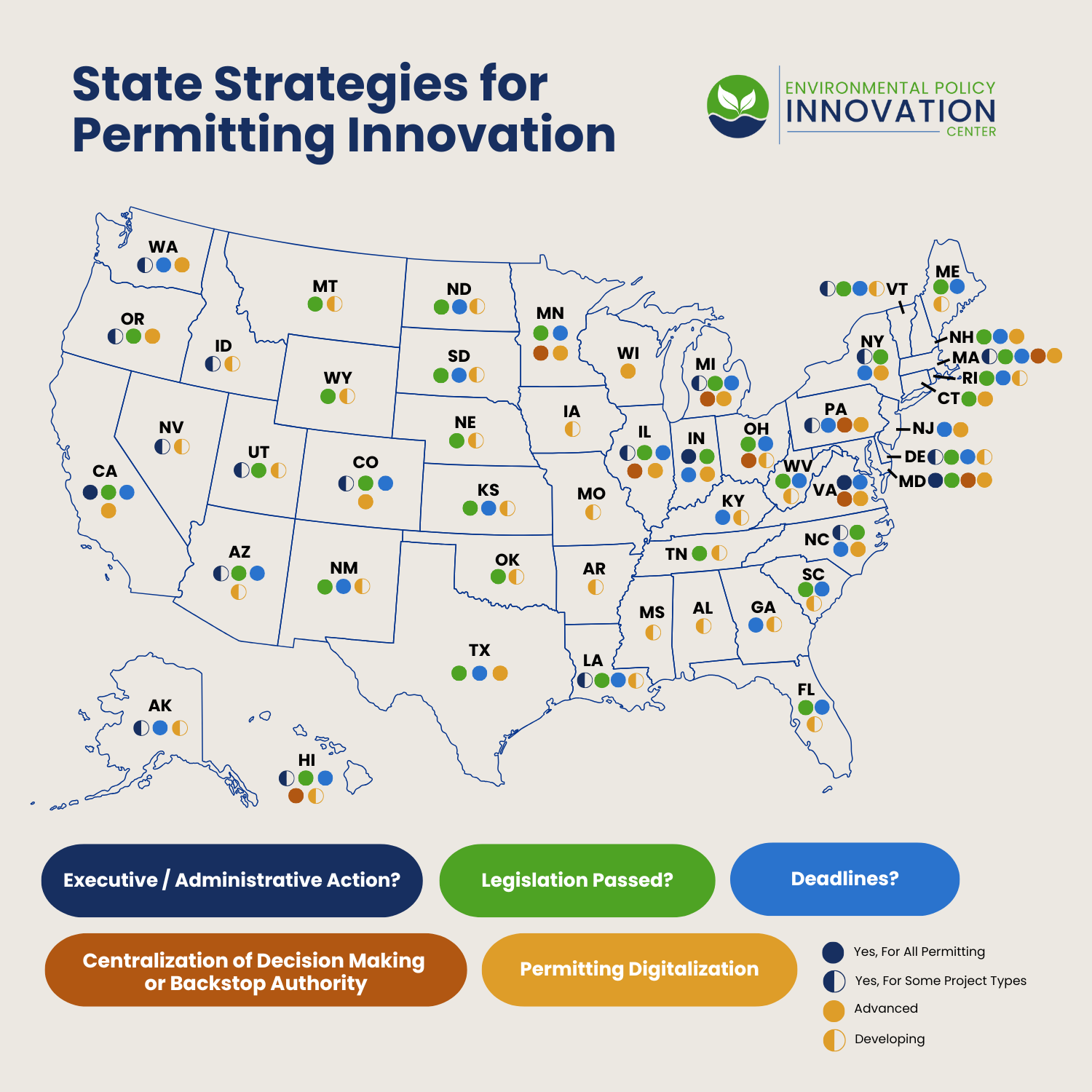
Better, Faster, and Fairer: State Strategies for Permitting Innovation

By: Brent Efron and Boon Sheridan

Permitting processes are too often too slow. As a result, it is hard, and sometimes impossible, to deploy the infrastructure and nature-based solutions Americans need to bring down costs, connect communities, restore the environment, and tackle the climate crisis. While much ink has been spilled on a range of proposed reforms to federal environmental laws, the reality is many of the significant bottlenecks to deploying infrastructure and restoring nature occur at the state and local levels. In this report we provide an overview of permitting reform efforts underway in State government.  We also provide specific examples where Governors, legislatures, or agency political leaders and career staff have achieved remarkable improvements in making permitting better, faster, and fairer.

Read More
Brent Efron

Brent, based in Washington, D.C., is a project management and policy professional with nearly 8 years of experience across local, state, and federal government, political campaigns, and the private sector. Most recently at EPA, Brent served in the Office of the Administrator as a Special Advisor for Implementation, supporting the deployment of $100 Billion in IRA/BIL funding. In that capacity, Brent regularly coordinated with staff from over 30 climate and infrastructure financial assistance programs, managed numerous projects related to program implementation and grant compliance, and served as EPA staff lead on multiple White House interagency policy initiatives. Prior to EPA, Brent conducted policy research for the Massachusetts Climate Chief and contributed to drafting a whole-of-government strategy for increasing Massachusetts’ climate ambition. Brent holds an M.P.A. from Princeton University and a B.S. in Mechanical Engineering from Washington University in St. Louis.

Previous
Previous

Funding and Financing Options for Full Lead Service Line Replacement

Next
Next

When Federal Earmarks Undermine State Priorities: Why Texas Loses Big Under SRF Earmarks