

Advancing Infrastructure Investment with State Revolving Funds
Making Every Water Infrastructure Dollar Count

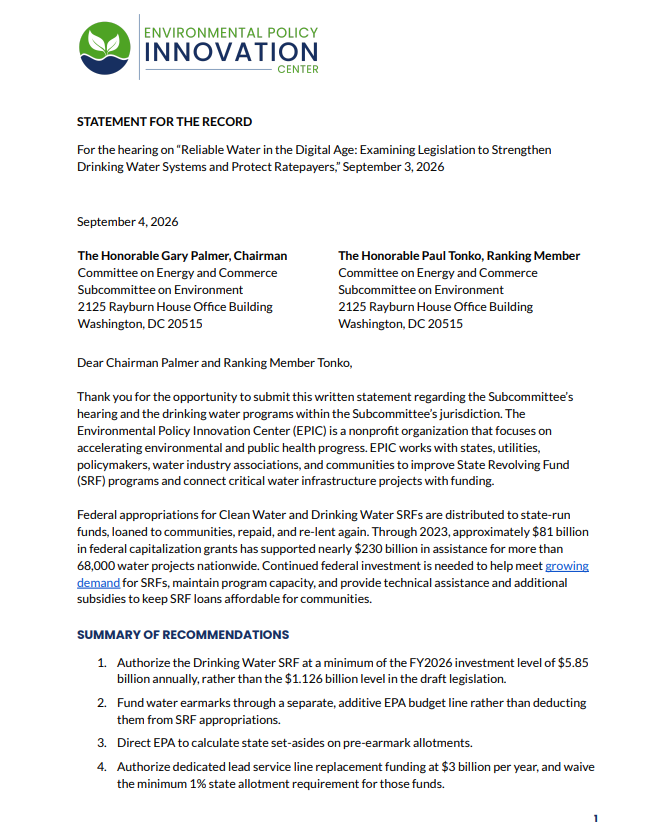
EPIC’s State Revolving Funds (SRF) initiative works to expand and expedite access to water infrastructure investments through the SRFs.
How We Work
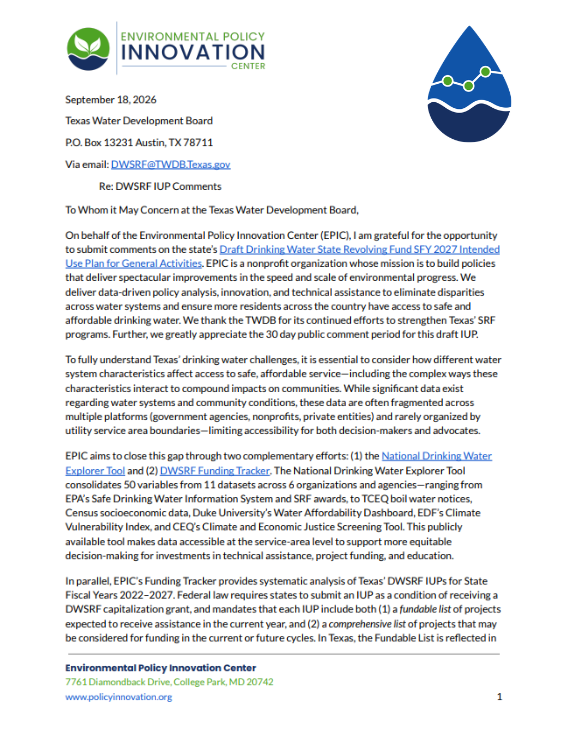
We strive to accelerate access to financing and address unnecessary hurdles and other persistent barriers that hinder progress in public health, environmental protection, and economic prosperity. By analyzing federal and state funding and financing pathways—particularly State Revolving Fund (SRF) programs—we identify problems, track how resources are allocated, and spotlight opportunities to make water infrastructure funding more efficient and impactful.
Through rigorous data analysis and timely policy research, we examine how states determine eligibility, allocate resources, and administer programs. Paired with hands-on experience delivering technical assistance through EPIC’s Funding Navigator, these insights reveal where policy and practice can evolve to reduce administrative burdens, streamline processes, and strengthen outcomes.
By collaborating with legislators, agencies, utilities, municipalities, and advocacy organizations, we develop and advance reforms, financing strategies, and practical solutions that help communities more effectively secure and use public funds—supporting affordable, resilient drinking water, wastewater, and stormwater infrastructure nationwide.
What We’re Working On
-
Data and analysis that make state DWSRF funding decisions more transparent, accessible, and understandable.
-
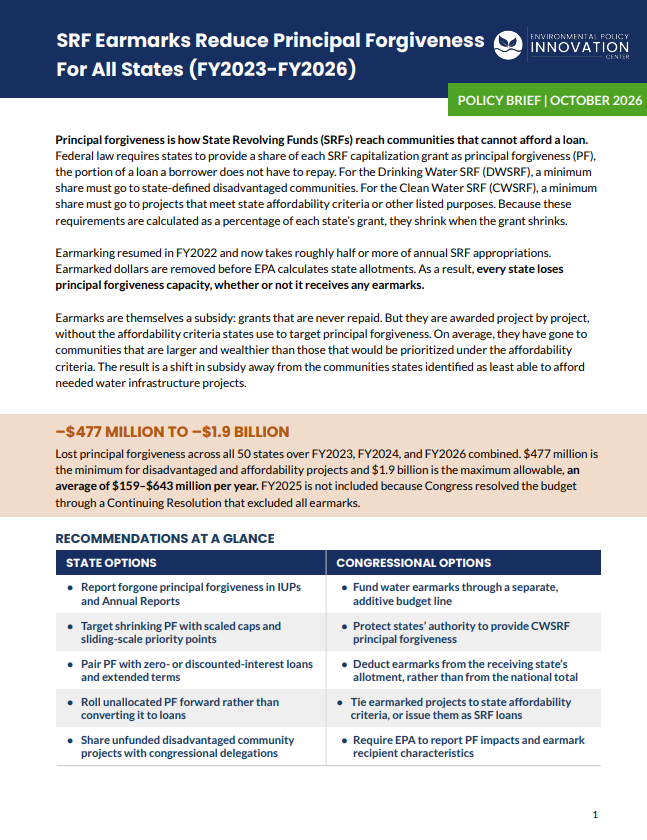
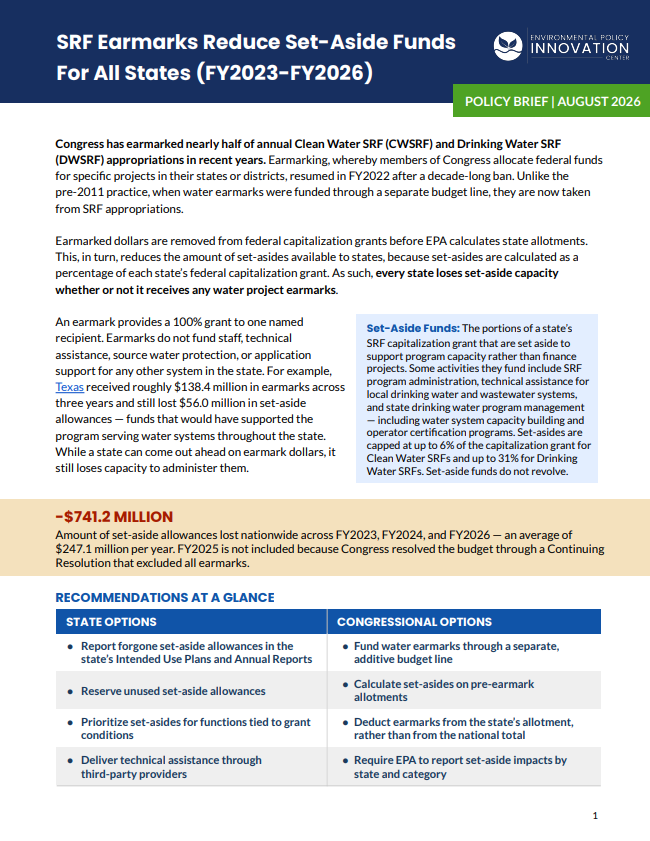
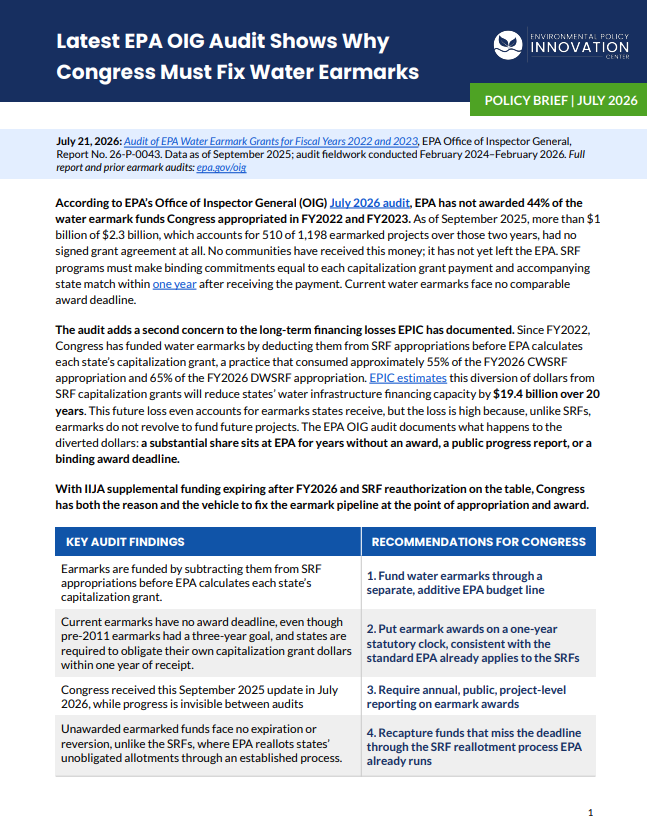
Analysis of how congressional earmarks affect the long-term sustainability and financing capacity of SRFs.
-
A growing library of briefs and explainers on policies that can strengthen SRFs and improve how funding reaches communities.
-
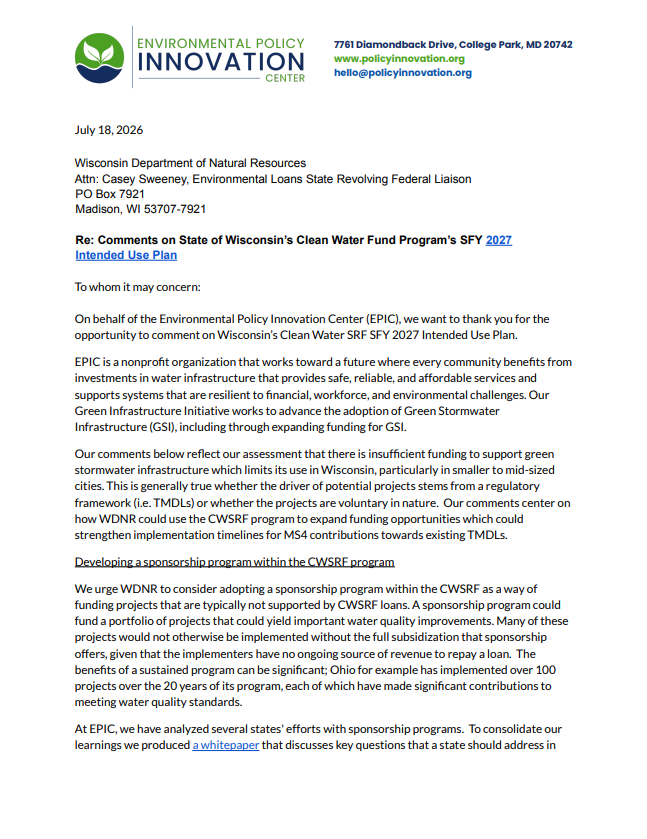
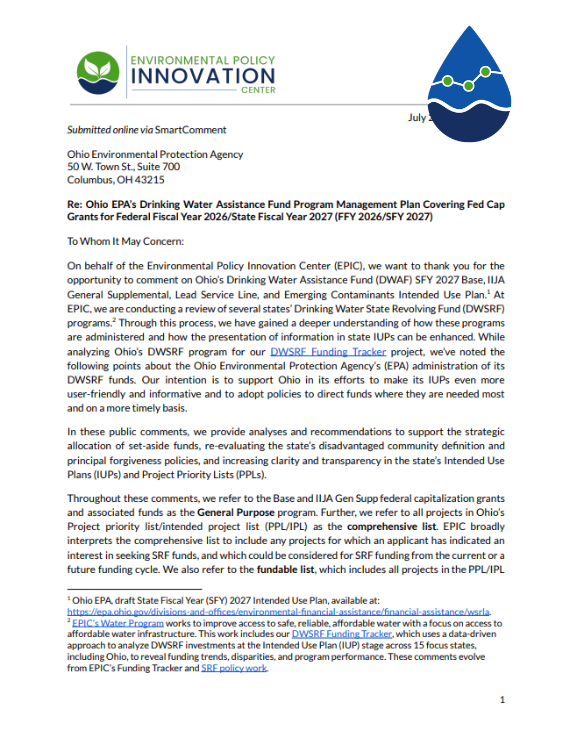
Analysis and recommendations to help states strengthen SRF policies through their Intended Use Plans.
Latest Insights

About The State Revolving Funds Initiative
We work to eliminate gaps in water infrastructure funding and financing by helping states, under-resourced municipalities, and utilities access and maximize federal water infrastructure investments.
What Drives Us
-
State Revolving Fund programs play a pivotal role in financing essential water infrastructure projects across the United States, offering a combination of funding and financing options to support a wide range of drinking water, wastewater, and stormwater projects.
-
Clean Water SRFs have provided $172 billion in below-market financing for 48,900 high-priority water infrastructure projects – 68% of which serve small communities – since their inception in 1987.
-
States have leveraged $24.5 billion in federal funds appropriated for Drinking Water SRFs since their inception in 1997 into $53 billion for high-priority drinking water infrastructure projects, financed at an average interest rate of just 1.25%.
-
EPA surveys estimate $625 billion is needed to upgrade the nation’s drinking water systems, and $630 billion is needed for wastewater and stormwater systems.
-
An EPA report found that 15% of households face a high water rate burden.
-
The State Revolving Funds make water investments more affordable by offering low-interest loans and sometimes additional subsidies that do not need to be repaid.
-
States have significant discretion over policies and practices that impact how quickly and how many communities access state revolving funds, which communities receive awards, and which projects move from application to construction.
Why This Matters
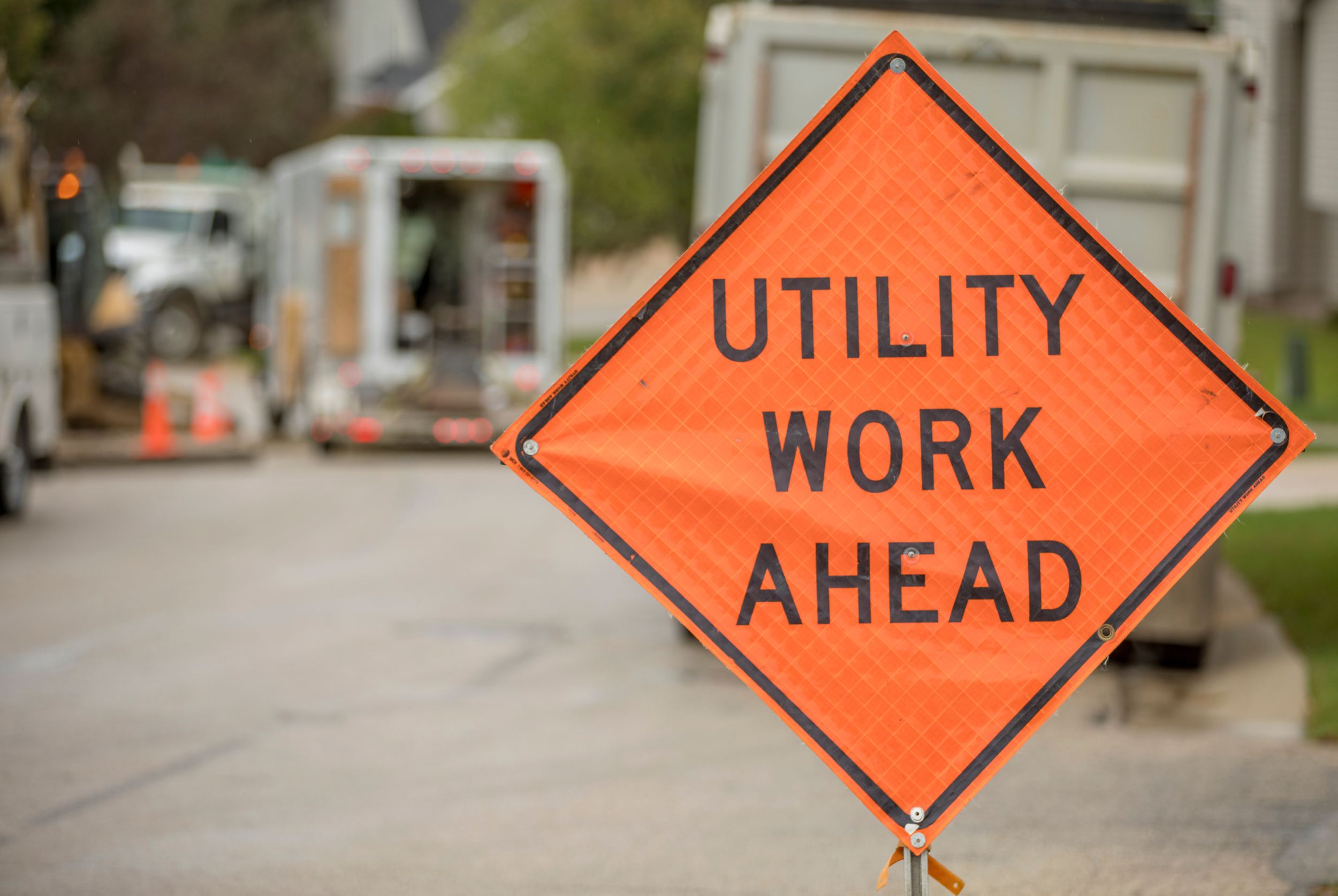
If we maintain the status quo with our infrastructure financing policies and practices, many small and under-resourced communities will be left behind, missing out on vital federal and state investments and deepening disparities in access and quality of service. In addition, projects may stall, ultimately costing more than they should. Limited access and longer timelines delay residents’ access to safe, reliable, and affordable water infrastructure.
Without intervention, there’s a risk that small and under-resourced communities will continue to struggle to access federal and state financing for water, further widening access gaps and water infrastructure disparities. Rooted in safe, reliable, affordable water service access for all, our work serves to connect funds to where they are needed most and ultimately close critical financing and funding gaps.