When the Data Reaches the Decision-Maker: What Happens Next?
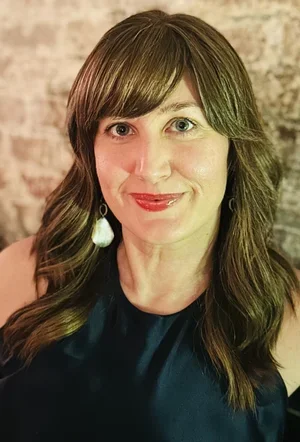
At the Data Foundation’s RegTech Data Summit in June, I was able to explore what happens when environmental risk data actually reaches the people making decisions about resilience and hazard mitigation. I was invited to moderate a panel called Resilience, Environmental Risk, and Growth, focused not only on how the data gets built, but what happens when it lands in the hands of a permitter, an insurer, a coastal engineer, or a resilience officer trying to figure out what to do and how fast to move. As a Special Policy Partner of the Data Foundation, EPIC had the added benefit of helping shape the afternoon's agenda around climate resilience, extreme weather data, and these questions more broadly.
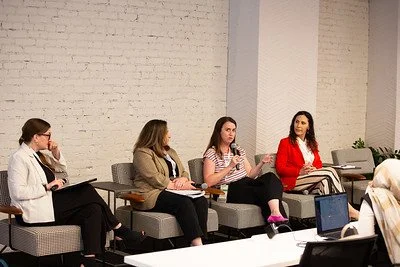
For my panel, I was joined by three experts with very different, inter-related perspectives: (from left to right) Emily Dhingra, Senior Project Manager for Climate Resilience and Adaptation at AECOM; Kathy Dello, Assistant Secretary for Resilience at North Carolina's Department of Environmental Quality; and Paula Pagniez, Executive Director of Climate Risk and Resilience at Howden. The following is a summary of what I learned from these brilliant experts.
First, data is never just data
Emily walked us through the environmental data her team at AECOM relies on, from geotechnical and groundwater information to coastal flooding, stormwater, and air quality. Some of the gaps she flagged were about scale, age, and resolution of data sets, for starters. These could include a wind gauge kilometers from your site, a model that needs downscaling, and/or data from 2000 that feels recent until you realize it's a quarter century old.
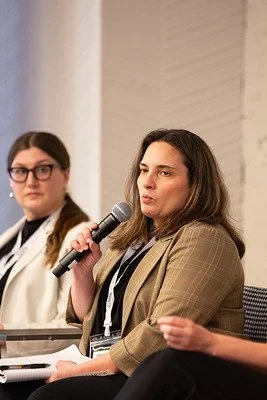
During our discussion she shared a story about a seemingly simple outfall pipe extension for a beach town that she worked on. The original design relied on wave data ending in 1999 and a FEMA study built on 1980s modeling. Meanwhile, newer data showed storm surge two or three feet higher than assumed, and the community needed construction done within a year. Though the project was already moving along in the design phase, the answer wasn't to start over. It was to compress timelines, negotiate scope changes, and work toward what Emily framed as "the best product that's going to last the longest and provide the most benefit.” It was clear that when newer data is introduced, and assumptions shift, compromise is key.
Emily underscored the human factor in interpreting data and called it "engineering judgment." This important interpretive layer has received more attention in recent years, but I think it is still consistently underestimated in resilience work. There is so often a need to balance urgency, available resources, and community needs along with the goal of building something that will perform when it matters most.
Second, good governance is a resilience intervention
Kathy came to her role from the North Carolina State Climatologist's Office. She explained that North Carolina Governor Josh Stein and his administration wanted data-centric decision-making, so they elevated resilience to the assistant secretary level, placing it inside DEQ. DEQ is both a regulatory agency and the state's environmental science agency. The result is that Kathy oversees coastal management and permitting directly. North Carolina issues about 3,000 coastal permits a year and denies about five or six. The goal, she explained, is always to find a pathway to yes.
Having resilience expertise within NC DEQ also means she is much closer to key connections that help communities navigate the technical, regulatory and permitting challenges. Getting resilience projects implemented requires bringing science, data, relationships, and institutional knowledge together.
Kathy also highlighted a tension that is surfacing more and more in resilience work. North Carolina has 551 incorporated communities and another 200 unincorporated ones. Resilience planning cannot work only for the Raleighs and Charlottes; every community deserves the same shot at a resilient future that well-resourced communities have.
A related challenge is that, after a disaster, communities can sometimes be overwhelmed with more support than they have capacity to leverage. That support doesn't always match where communities are in their decision-making process or the decisions they are already trying to make. For instance, when Hurricane Helene struck western North Carolina on September 27, 2024, the storm caused roughly $60 billion in damages across the state. Following this disaster, many groups arrived hoping to support local recovery through convenings and workshops. It became quickly clear to Kathy that the impacted local community members and leaders didn’t need another round of “sticky notes on the wall.” The town managers she was working with already knew they needed to move their wastewater treatment plant, remove a dam, and elevate town hall. They needed the projected 500-year flood numbers and money for implementation, not another meeting. Communities are often on step six, seven, or eight when it's too often assumed they're on step one.
Engagement fatigue is real. That is why North Carolina's Resilient Coastal Communities program meets people where they are by setting up their outreach in lower pressure, socially-oriented public spaces such as the Art Walk in Elizabeth City or a Pig Pick'n in Newport instead of adding another meeting to the calendar.
Lastly, capital follows certainty…except when it follows probability!
I framed my question to Paula around something I hear from finance colleagues: capital follows certainty. She offered an important reframing: in the insurance sector it's about probabilities. Her team at Howden has spent three years calibrating catastrophe models with climate data to quantify the reduction in losses when governments invest in resilience. That quantification is what enables movement of insurance sector capital.
I was struck by her point that investing in resilience doesn't necessarily lower premiums. However, she followed by emphasizing that without investment, losses only continue to grow, and that “delta between the cost of doing nothing and the cost of investment” is how Howden frames the return on resilience.
Paula also made the important point that insurance is a societal public good. A rising premium is a signal about the risk and exposure of an asset, and those signals can start influencing lending markets and consumer behavior. She made the case for parametric insurance as well, which pays out when a defined extreme weather event occurs, providing faster access to funds following a disaster. But insurance products like this only work with open, transparent, independent data.
I think that is what Michael Mussi of Donnelley Financial Solutions meant earlier in the day when he said that "data becomes information when people trust it.”
No trusted data, no insurance product, no investment.
The Next Challenge: Turning Data Into Resilience
Communities are further along than we assume, and starting from scratch wastes their time and erodes trust. An integrated, collaborative governance structure is itself a resilience intervention. And the insurance sector has tools, data, and capital that the restoration and resilience community could, through close collaboration, try to leverage moving forward.
EPIC also sees an opportunity for funding innovation here, which is why we brought on a fellow to dig into the intersection of resilience, insurance, and restoration. The market is still developing, but the tools and frameworks are evolving at a rapid pace. Through this work, our goal is to better understand where these emerging connections create new opportunities for restoration and resilience investment. Underpinning all of these emerging opportunities is the need to better move data to resilience action.
I’ll end by expressing my gratitude to the Data Foundation, specifically Ashley Nelle-Davis and Dora Engle, for the honor and opportunity to moderate this panel and contribute to the larger event. Many thanks to the panelists who joined me in this discussion, I look forward to building a more resilient world with you all.