


We need to simplify environmental permits to boost their impact

Green Finance Institute: Revenues for nature announces global effort to unlock private sector finance for nature restoration and conservation

Some Myths and Misunderstandings in Biodiversity Credit Markets
Biodiversity credit markets are new and unfamiliar to most of us, and misconceptions abound. Because carbon credit markets have attracted so much attention - good, bad, and ugly, there is a (mostly) false impression that carbon markets are, or should be the single model for a biodiversity market, and that couldn’t be farther from the truth. I spoke recently as part of an excellent series on biodiversity credits hosted by the Environmental Leadership Training Initiative, and below I’ve adapted my comments from that event to address some of the myths and doubts often posed by both advocates and skeptics. If others come to mind, go ahead and throw them in the comments below.

The Next 55 Earth Days

An Abundance of Nature
EPIC champions a bold approach to environmental restoration, aligning with the Abundance mindset by streamlining wetland restoration, leveraging technology, and using pay-for-success models. By focusing on outcomes over process, EPIC aims to make nature restoration faster, scalable, and impactful—ensuring clean air, water, and ecosystems are abundant and accessible.
Trump’s Permit Tech Memo: Promising Ideas, Implementation TBD

This Tool is Changing How We Protect our Wetlands, Here’s How You Can Help

Federal Policy Shifts Impact Tribal Funding Access and Environmental Restoration
Capital in Nature-Based Solutions Markets
The goal of this project was to determine which financial investments from foundations and other impact investors would be most likely to drive others to invest in NBS. We interviewed fourteen companies and investors focused on deploying capital into nature-based investments.
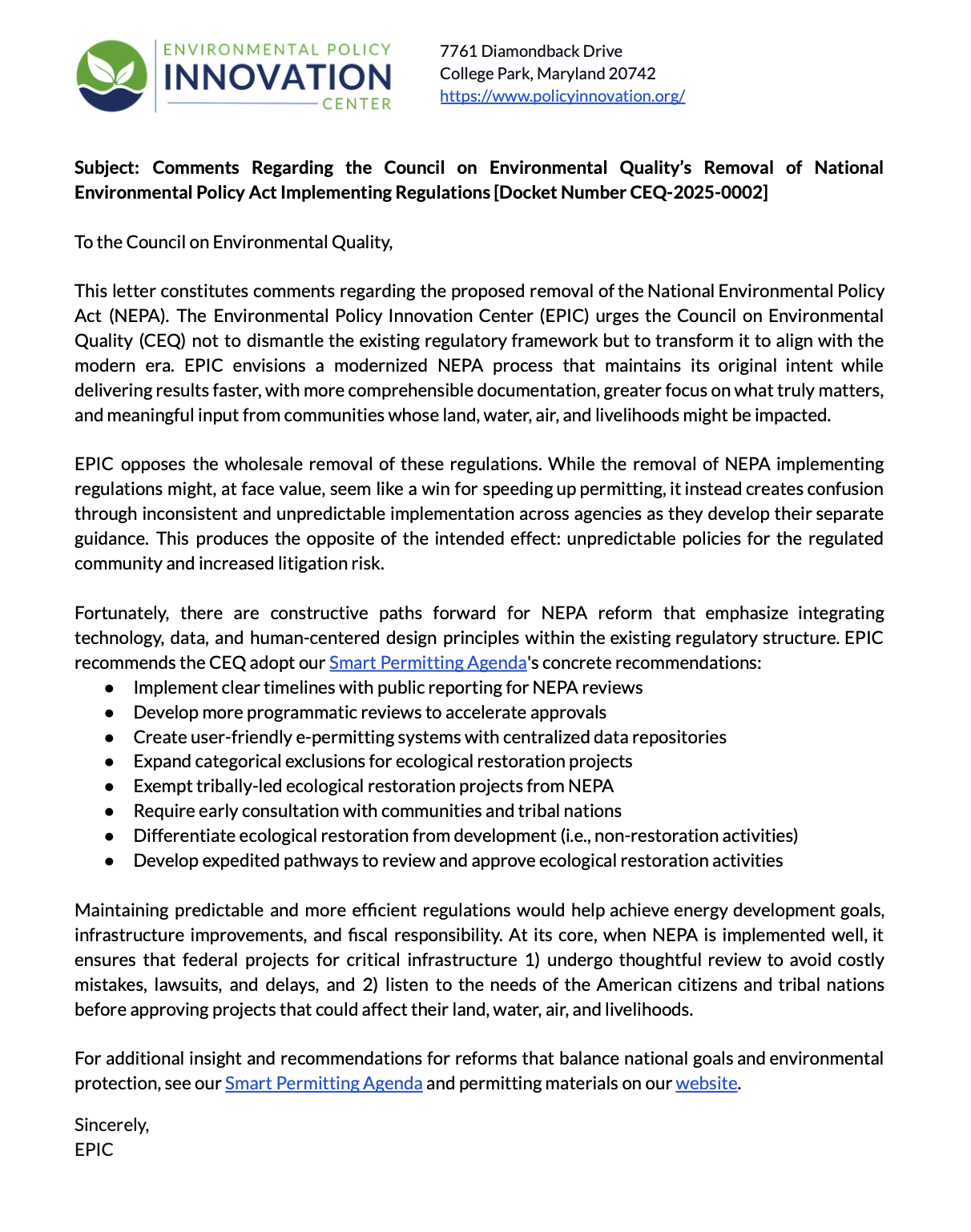
Comments Regarding the Council on Environmental Quality’s Removal of National Environmental Policy Act Implementing Regulations
EPIC submitted public comments opposing the wholesale removal of NEPA regulations by the Council on Environmental Quality (CEQ), arguing it would create confusion and increase litigation risk. Instead, we proposed modernizing the NEPA process through our Smart Permitting Agenda, which includes implementing clear timelines, developing programmatic reviews, creating user-friendly e-permitting systems, and establishing expedited pathways for ecological restoration. We believe an updated regulatory framework can maintain NEPA's original intent while delivering faster results and ensuring meaningful community input.

EPIC's Smart Permitting Recommendations to the U.S. Senate Committee on Environment and Public Works

Streamlining Habitat Restoration in Washington: A Look at the Habitat Recovery Pilot Program

Smart Permitting Agenda

Pennsylvania’s Utilization of the Abandoned Mine Lands (AML) IIJA Funding

Nosferatu isn’t the only vampire lurking around: The vampires skulking in the shadows of environmental procurement

Restoring Los Angeles: Opportunities for Indigenous Leadership After Wildfires

¿Se puede cambiar un palo borracho por lapacho? Una mirada al mercado emergente de servicios ambientales de Paraguay
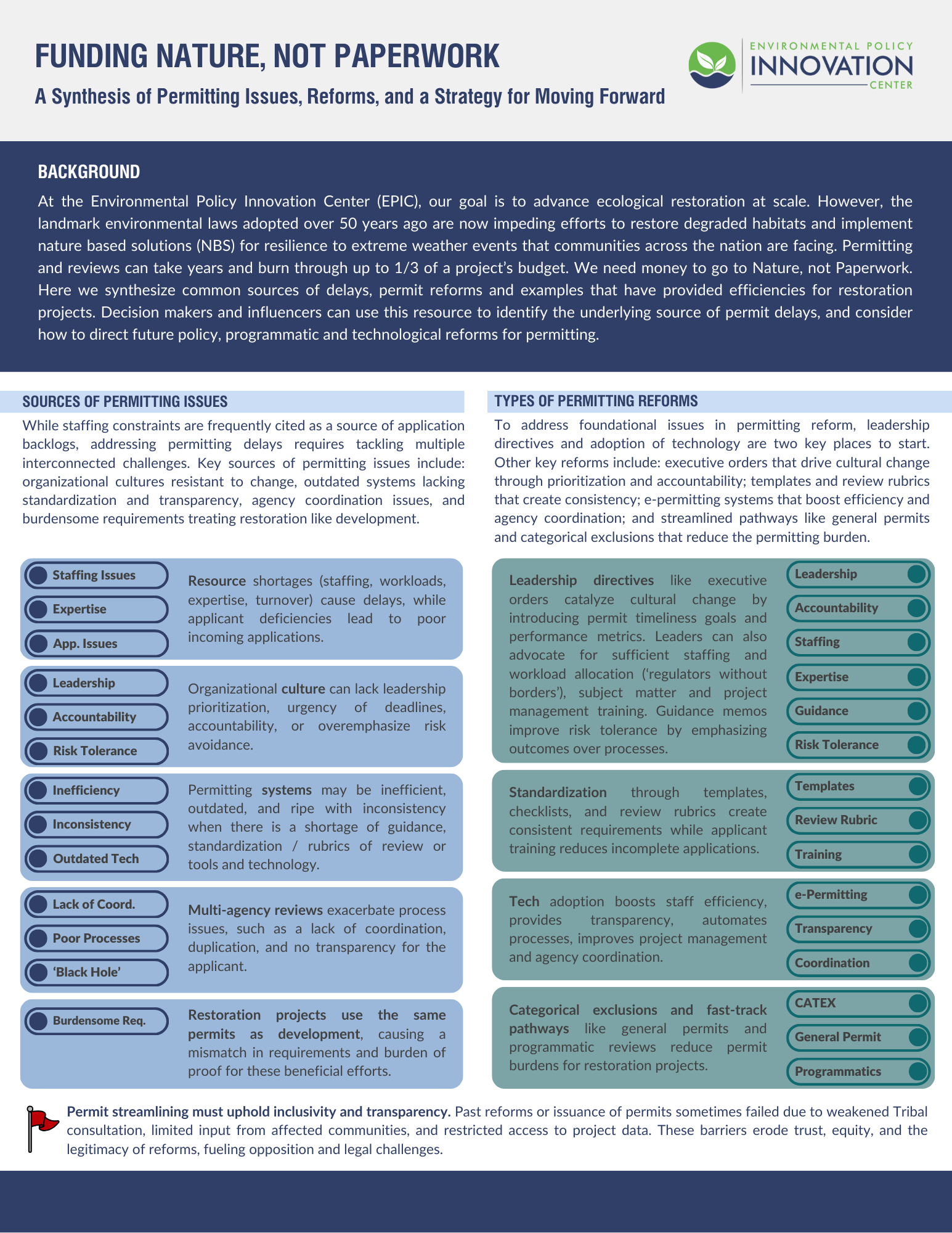
Funding Nature Not Paperwork 2.0: A Synthesis of Permitting Issues, Reforms, and a Strategy for Moving Forward
Can tropical forest loss be offset by a forest “credit”? A closer look at an emerging environmental market in Paraguay

10 Fundamentals for Smart Permitting
The Trump-Vance Administration is excited about permitting reform, so are we! And, to get there, we want to see smart permitting. Efficient and effective permitting should be about getting to “yes” or “no” on projects faster—and we know there are hundreds of ways to do that without minimizing scientific rigor, transparency, and public participation. We’ve researched dozens of federal and state policies and technologies that have sped up permitting. Here we synthesize our 10 fundamental recommendations for improving the environmental review and permitting process.