Caveat: I am not a lawyer, this is just a summary informed by working thematically on ESA policy relating to compensatory mitigation and pre-compliance conservation instruments.
What changed: Yesterday, the FWS and NMFS completely removed the regulatory definition of “harm” at 50 CFR 17.3 and 222.102, effective September 14, 2026. That’s the only change in the final rule, but there’s a lot behind that.
For reference, the definition of “harm” in the CFR was: Harm in the definition of “take” in the Act means an act which actually kills or injures wildlife. Such act may include significant habitat modification or degradation where it actually kills or injures wildlife by significantly impairing essential behavioral patterns, including breeding, feeding or sheltering.
The definition of “take” in the ESA still is: The term "take" means to harass, harm, pursue, hunt, shoot, wound, kill, trap, capture, or collect, or to attempt to engage in any such conduct.
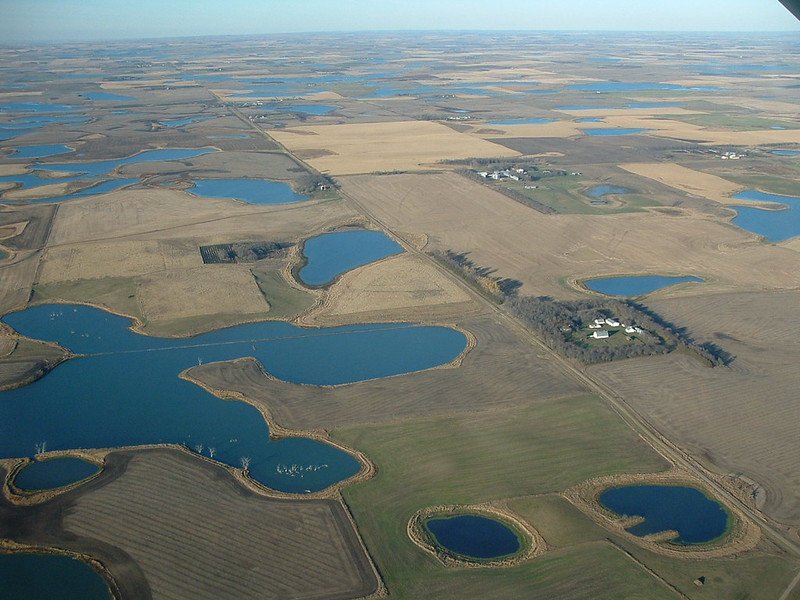
Photo credit: USFWS / Laura Hubers
So “harm” remains one of the ten verbs in that statutory list, it's just no longer defined by regulation. The preamble indicates the Administration will interpret harm as Justice Scalia did in Babbitt v. Sweet Home:
The term “harm,” like the other nine verbs in the definition of “take,” should be construed to require an “affirmative act[] . . . directed immediately and intentionally against a particular animal—not [an] act[] or omission[] that indirectly and accidentally cause[s] injury to a population of animals (515 U.S. at 719-720 (Scalia, J., dissenting))
The final rule argues this is the single best reading of the ESA statute. But this is not codified regulatory text, it’s only indicated as the interpretive lens the FWS will apply going forward. The final rule points to the Loper Bright SCOTUS case removing deference to Agency interpretation of statute into regulatory language (aka Chevron deference).
The removal of the “harm” definition may have a large effect by shrinking habitat impacts that would be considered and addressed (avoided, minimized, mitigated) in ESA permitting. Under Section 10 (private land / permits), projects no longer have to consider the potential harm from incidental habitat modification if there is no specific harmful intent of an activity like grading a lot, paving a road, clearing brush, harvesting trees, building a data center... any activity on private land.
Projects with a ‘federal nexus’ of another federal permit or federal funding permitted underSection 7 still can’t modify habitat if it jeopardizes the continued existence of the species, or if it diminishes the value of critical habitat. But this only applies when there’s a federal nexus and that trigger has diminished following the SCOTUS Sackett decision that resulted in a reduced scope of the CWA Section 404 and reduced federal wetland/stream permits. Also, critical habitat has only been designated for 995 of 2,385 listed species, and the Administration has proposed additional rules that may reduce when critical habitats are designated.
EPIC brought up the potential effect on the restoration economy of the proposed rule in our comment letter to the proposed rule - arguing that the restoration industry has a reliance interest in the proposed rule change. Our argument pointed to evidence about the economic scale of the restoration industry, including grey literature (reports estimating the monetary value of species offset credits sold - $541M), peer-review research about the total economic output of the restoration industry ($9.6B annually, 53,000 jobs), and ERBA's informal survey of members (of $483M invested, $300M chilled by the proposed rule). This argument was rejected in multiple comment responses (13, 18, 21). The response was that the market for these services exists only because of a regulation the Services now consider unauthorized, so reliance on it is “regulatory rent-seeking” entitled to “no or diminished weight” under Department of Homeland Security v. Regents.
Regardless of this dismissed reliance interest, it is frustrating that the Regulatory Impact Analysis (RIA) was completely one-sided. Note: I can’t find the RIA anywhere so I’m relying on what the rule said about the RIA. The rule indicates the RIA quantified cost savings to industry as a benefit of the rule ($361.3M at a 3% discount rate, $521.0M at 7% from reduced HCP planning and mitigation costs) but declined to acknowledge the impact to the restoration industry in the RIA (much less foregone ecological benefits, ecosystem services, or future recovery costs raised in comments), calling these “unknown and not amenable to reliable monetization.” EPIC noted the peer-reviewed research conducted to monetize the size of the restoration industry (BenDor et al., 2023). Admittedly this research did not specifically break down costs and economic impacts specific to the ESA.
Our Tribal treaty rights reliance-interest argument was acknowledged respectfully and then set aside on a categorical distinction: treaty rights are honored “in full,” but treaty rights and ESA obligations are legally separate. That response doesn't really engage with the practicality that ESA habitat protection functioned as a mechanism protecting the resource base the treaty rights depend on.
The rule also makes the argument that there is still protection of species habitat in the ways listed below. It will be an interesting experiment to see if the US can maintain the intent of the ESA with just these regulatory and voluntary tools.
Section 5: Federal land acquisition authority. Appropriations-dependent, voluntary, small scale relative to what a take prohibition covered.
Section 6: Cooperative agreements with states. Largely funding and grant mechanisms, not a regulatory lever on private conduct.
Section 4: Critical habitat designation itself is technically untouched by this rule, but FWS and NMFS have a separate, pending rulemaking package (proposed November 21, 2025, comment period closed December 22, 2025) that would restore 2019-era standards making it easier to find critical habitat designation “not prudent,” require economic-impact disclosure at the proposal stage, and expand exclusion criteria under Section 4(b)(2). EPIC filed comments on this package. If finalized, less habitat gets designated as critical in the first place, which narrows Section 7's reach further.
Voluntary conservation: Nothing stops landowners from doing more than the law requires. Scale is limited and non-enforceable.
State law: Only a genuine backstop where states built independent capacity, which is uneven. If mitigation requirements are an indication, California's state ESA is the strongest example - it’s the only state with regulatory teeth strong enough to routinely require mitigation that we’ve seen.