Fact Sheet: BAAJA is a Long-Term Win for Wetlands, With Hard Compromises

EPIC is continuing to analyze the long-term impacts of the 400+ page Bipartisan American Affordability and Jobs Act. For more information on the more than 70 provisions, check out our BAAJA dashboard.


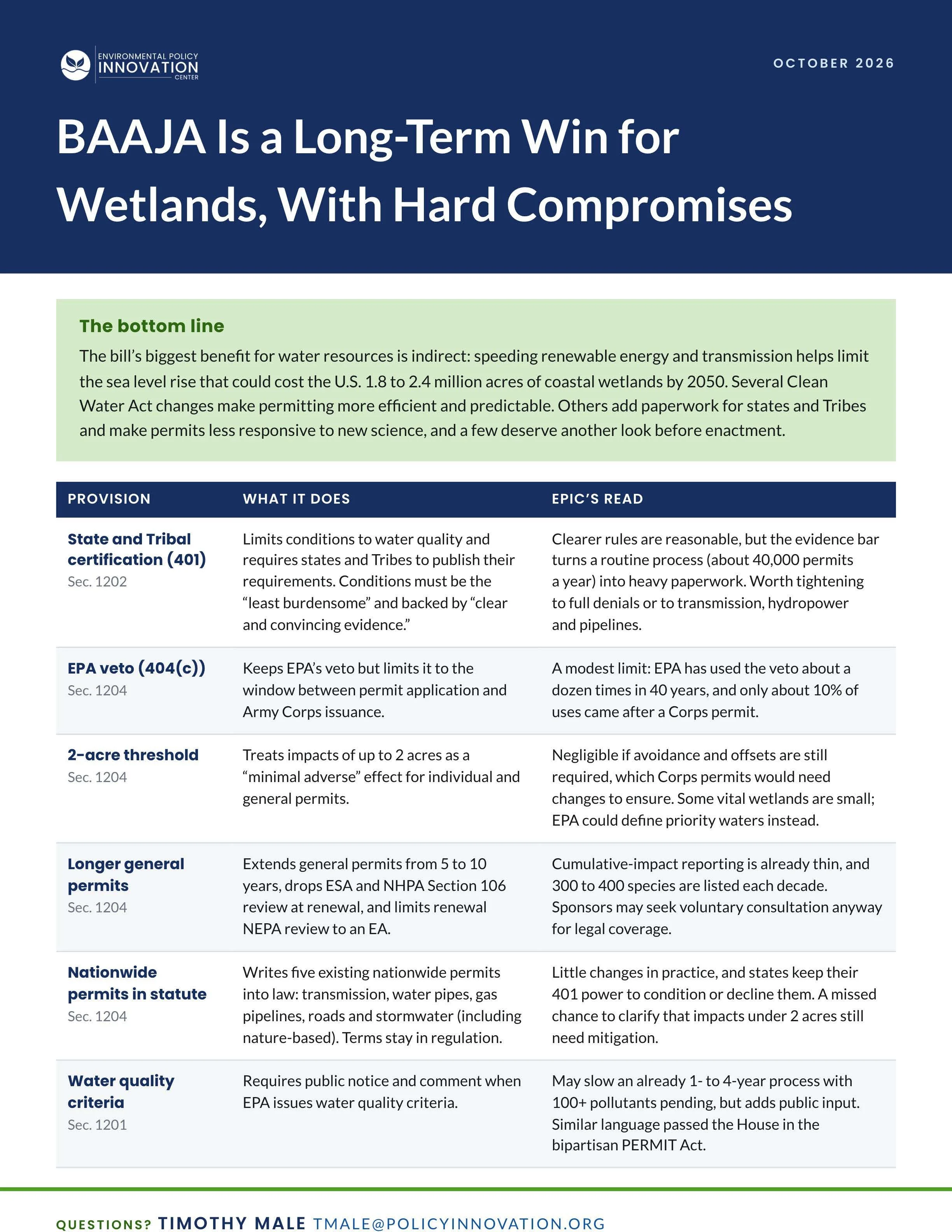
The bill's biggest benefit for water resources is indirect: speeding renewable energy and transmission helps limit the sea level rise that could cost the U.S. 1.8 to 2.4 million acres of coastal wetlands by 2050. Several Clean Water Act changes make permitting more efficient and predictable. Others add paperwork for states and Tribes and make permits less responsive to new science, and a few deserve another look before enactment.

Tim Male

Tim founded the Environmental Policy Innovation Center in 2017. Prior to launching this startup, he served as an Associate Director at the White House Council on Environmental Quality, Vice President for Conservation Policy at Defenders of Wildlife, Director at National Fish and Wildlife Foundation, and Co-Director of agriculture policy at Environmental Defense Fund. He holds degrees in science from Yale University and the University of Hawaii. His writing has appeared in the Wall Street Journal, Washington Post, Science magazine and a diversity of peer-reviewed journals. He has received a Marshall Memorial Fellowship and AAAS Science and Technology Policy Fellowship (declined). He also ran for office and won, serving three terms as a city councilmember and leading the successful effort for that city to become the first in the country to lower its voting age to 16.

Previous
Previous

Fact Sheet: What "Best Available Science" Means

Next
Next

Fact Sheet: BAAJA is a Net Positive for Endangered Species