
BUILT TO LAST: Resilient Road-Stream Crossings for People, Fish, and Wildlife
Co-Written by: Kavita Kapur Macleod, Garrett Altmann, Leanne Spaulding, Marta Brocki, Renee Callahan, Nova Simpson, and Erin Sito, J.D.
Road-stream crossings are critical to people and wildlife, and they need help. The U.S. has over 4 million miles of roadways and over 60 million culverts and bridges that constitute the transportation system of the world’s largest economy. However, many of these structures are aging and were designed without considering the changing weather patterns that are delivering more frequent and intense rainfall and other events to certain parts of the country. There is increasing recognition that while these structures allow cars, trucks and railroads to move across the vast American landscape, they can at the same time restrict the movement of water, aquatic species, and terrestrial animals - resulting in negative impacts to people, wildlife, and ecosystems including flooding and wildlife-vehicle collisions.
Integrated road-stream crossing design is a durable, cost-effective, and multi-benefit solution. Integrated road-stream crossing design is a solution that can make road-stream crossings resilient to changing weather patterns and allow for aquatic organism and terrestrial wildlife passage. These “Built to Last” structures reduce the social, economic, and environmental costs of damaged or failed bridges and culverts and support healthy aquatic and terrestrial wildlife populations.
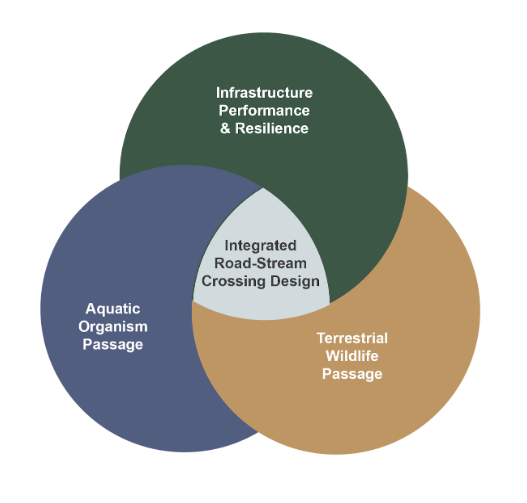
Time is of the essence and we have a cost-effective design solution. As the nation’s aging infrastructure faces increasing stress from more extreme weather in many regions; prioritizing upgrades and replacements that incorporate integrated design can help prevent costly failures and build greater resilience into our transportation system. Integrated road-stream design offers a practical, cost-effective, multi-benefit solution to improve infrastructure performance while supporting ecological connectivity.
This report is a roadmap for decisionmakers seeking resilient solutions. This report reflects the combined efforts of EPIC, ARC Solutions, and Wildlands Network to highlight what integrated road-stream crossing design is and how we can get there. The report is designed to support decisionmakers addressing aging and failing culverts and bridges to understand the benefits of integrated road-stream crossings, the design features, and the policy approaches that can facilitate their implementation. Specifically, this report:
Explains how changing weather patterns are already impacting aging culverts and bridges and the associated social, economic, and environmental costs;
Identifies model approaches to integrated road-stream crossing design including case studies and region-specific design considerations; and
Draws on existing policies and state agency experience to identify policy recommendations to facilitate integrated road-stream crossing design.
Built to last. Adopting an integrated design approach can empower federal and state transportation, wildlife, and resilience agencies to transform single-purpose crossing structures into durable public assets that deliver economic, social, and ecological value.