Co-Written By: Garrett Altmann, Leanne Spaulding, Phoebe Higgins
Our Restoration Team recently gathered in sunny Miami for our annual retreat, providing a valuable opportunity to step from behind our screens and work together in person. Between site visits, team-building activities, and plenty of collaborative discussion, the retreat offered meaningful time to connect and learn as a group. A major highlight was our field tour with the City of Miami's Office of Resilience and Sustainability, where we saw firsthand how the city is responding to climate challenges through forward thinking, integrated solutions.
Miami has taken a proactive public finance approach to resilience through the Miami Forever Bond, an ambitious initiative designed to build a stronger, more resilient future for the city. The Bond allocates $400 million across five priority areas aligned with the City’s most urgent needs: sea-level rise and flood prevention, roadways, parks and cultural facilities, public safety, and affordable housing. These investments support residents, businesses, tourism, and the city’s long-term legacy while reducing vulnerability to sea-level rise and increasingly severe storm events, creating jobs, and lowering long-term infrastructure costs.
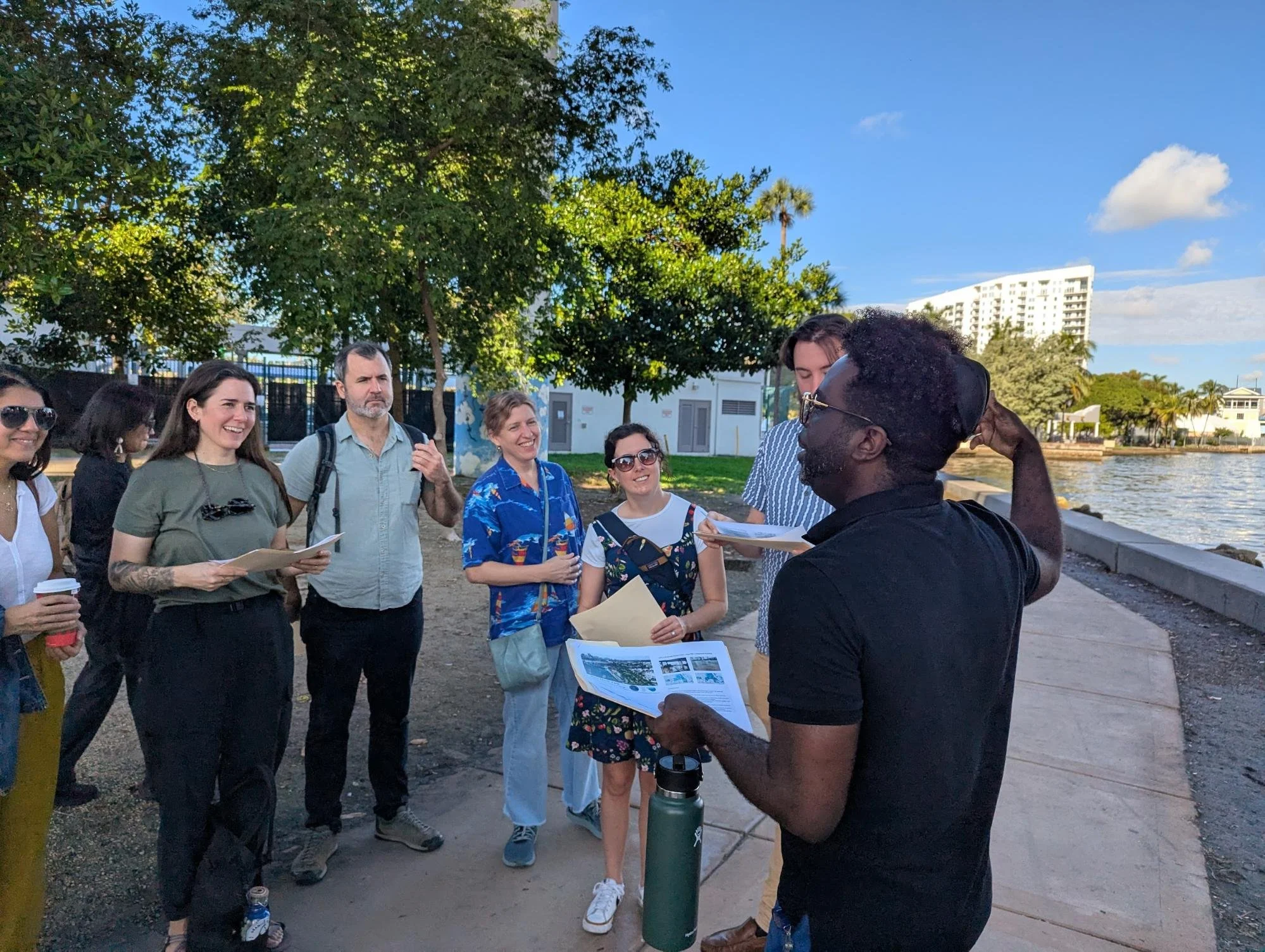
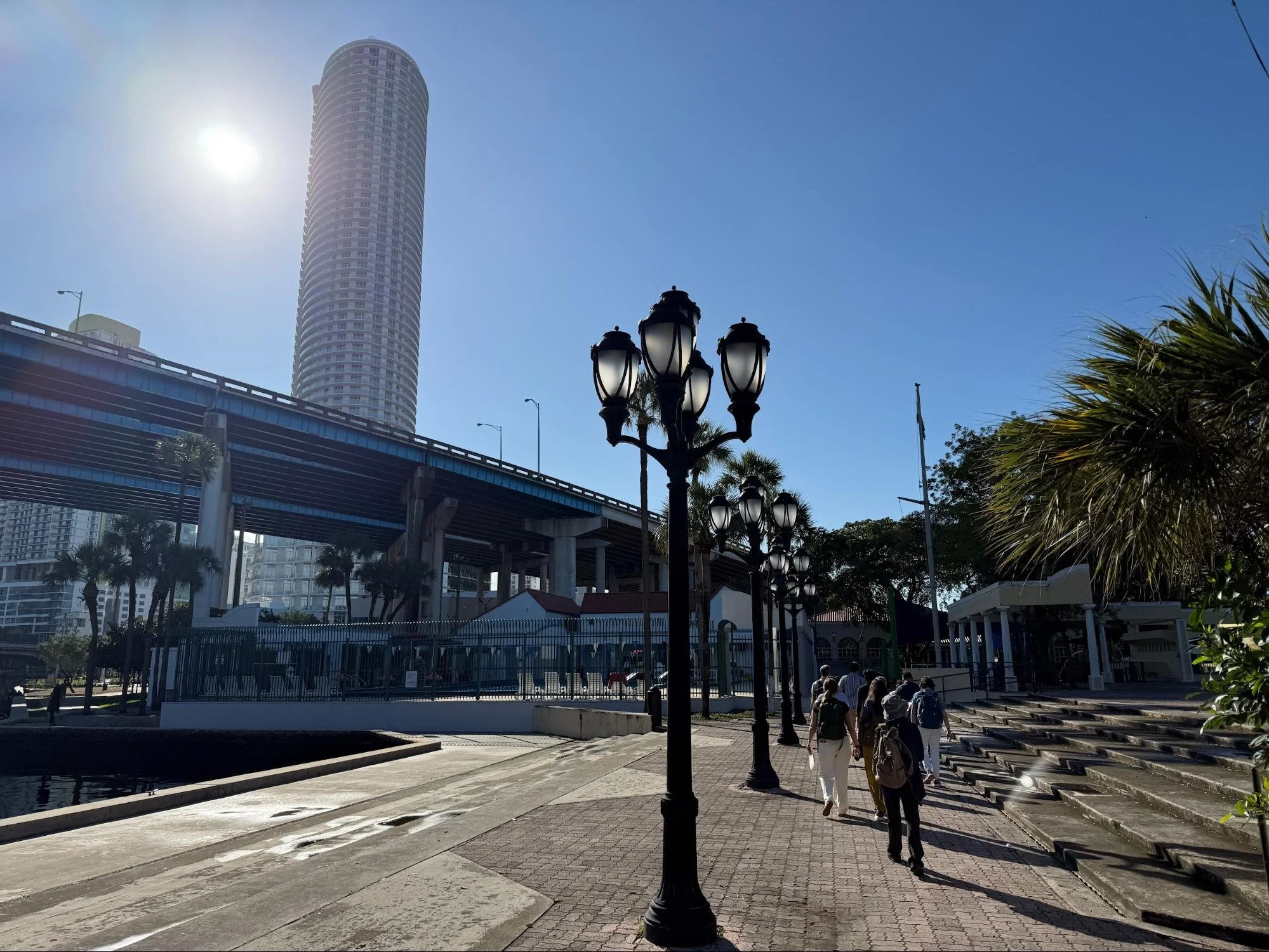
Our tour kicked off at the gates of José Martí Park, guided by an incredible team from the City’s Office of Resilience and Sustainability:
Allisa Farina, Assistant Chief Resilience Officer
Dr. Tim Ostemberg, Resilience Program Manager
Reinaldo Rodriguez, Liaison to the City of Miami Sea Level Rise Committee
Sonia Brubaker, Chief Resilience Officer (unable to attend)
Together, they walked us through three interconnected projects located at and around the park, illustrating how Miami is applying a holistic, systems-based approach to urban resilience.
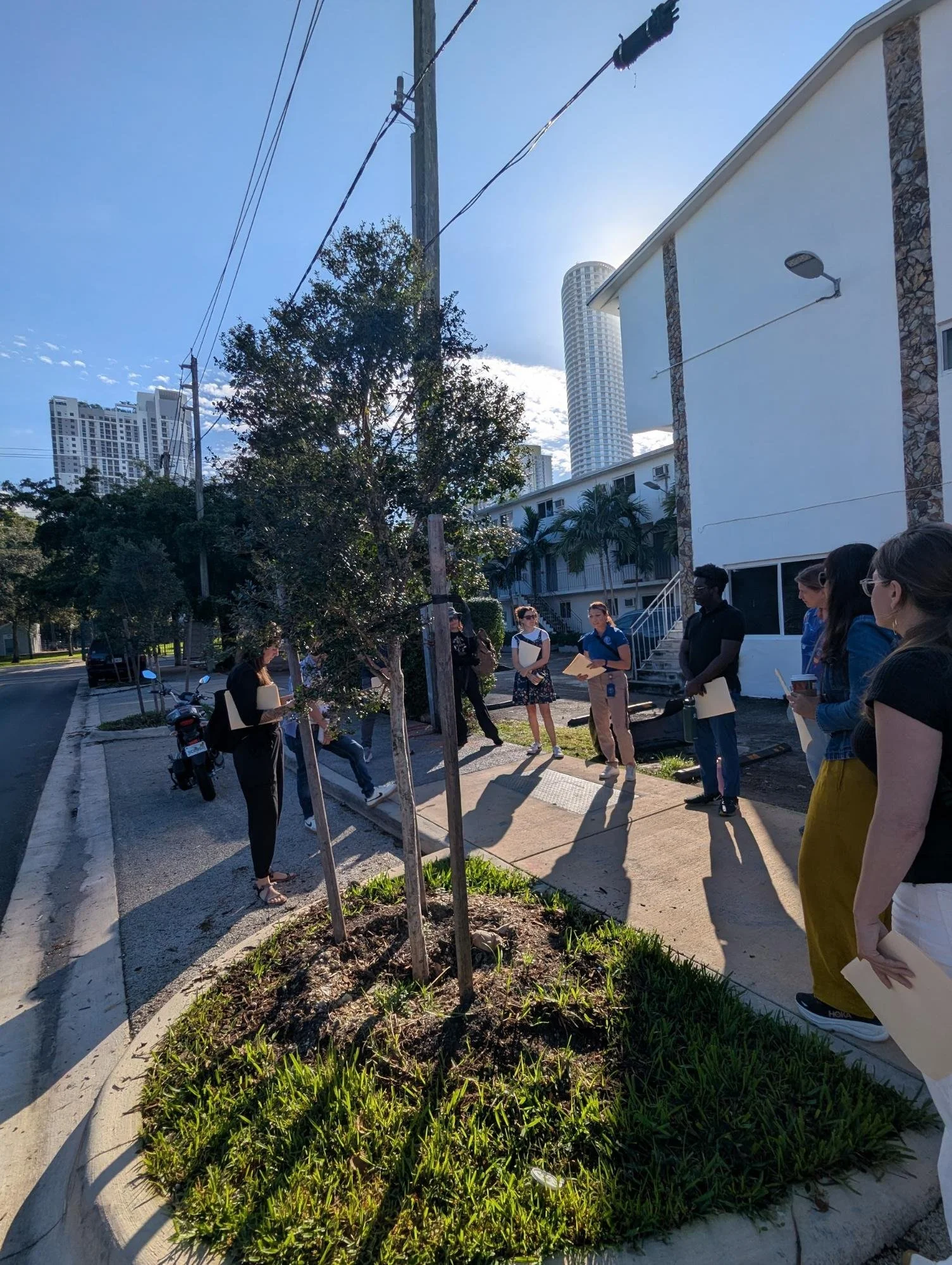
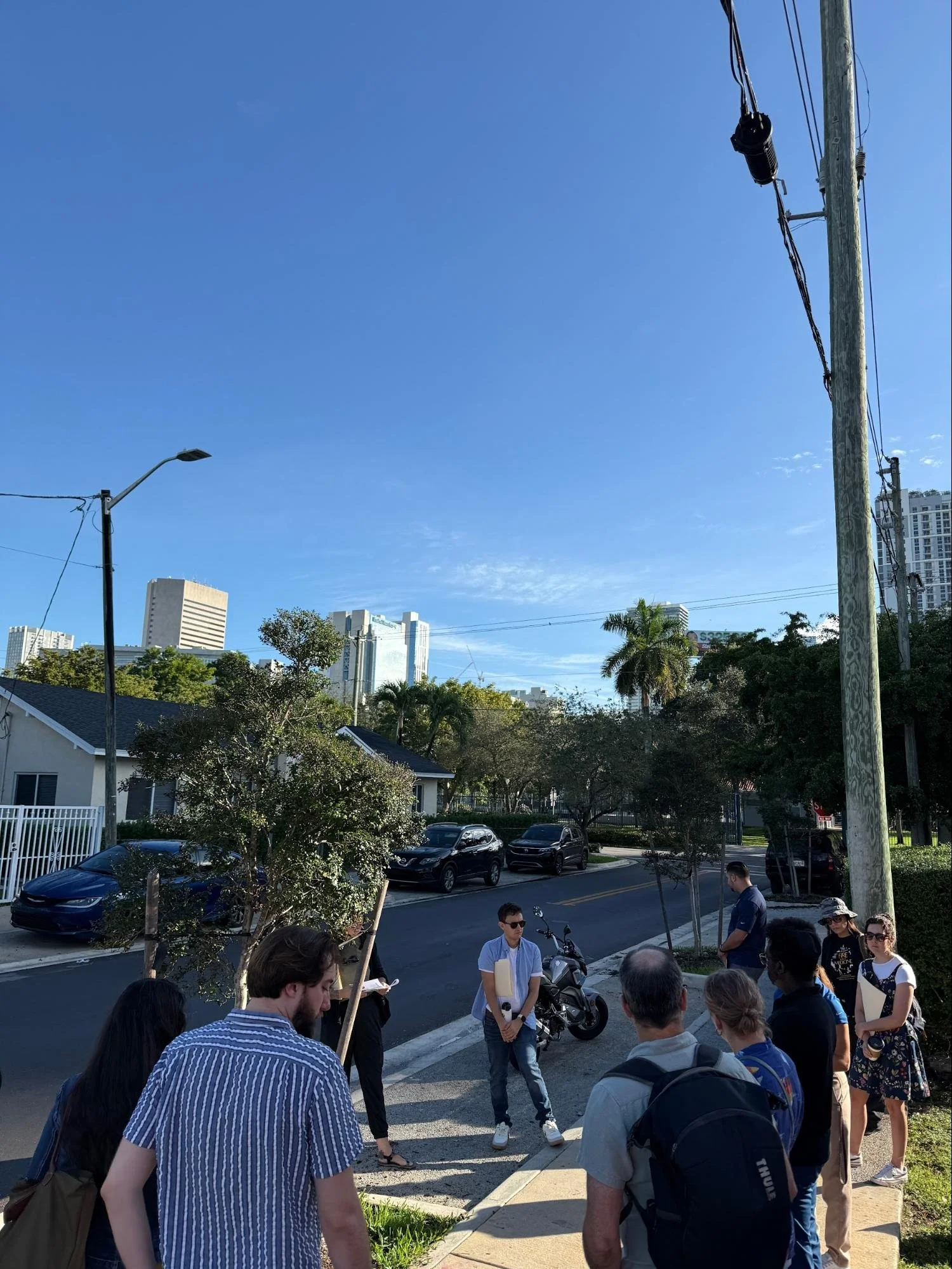
Tour Stop 1: “Living Streets” - The Little Havana Blue Street
Our first stop highlighted an initiative designed to manage stormwater and reduce neighborhood flooding by integrating water management directly into street design. The project takes a holistic approach to flood mitigation, accounting for a shallow groundwater table, intense stormwater runoff, native vegetation, on-street parking, and continued residential access.
Key design elements include permeable asphalt and concrete surfaces, “living street” concepts, and planted bioswales that work together to increase infiltration, provide shade, and minimize surface runoff. One of the most striking aspects of the project is its performance target: the street is designed to withstand storm events exceeding a 1,000-year return interval. To put that into perspective, a 1,000-year cloudburst can generate more than 250,000 gallons of rainfall in just 24 hours! For context, that’s nearly the volume of an acre-foot of water, which is approximately 325,000 gallons.
Tour Stop 2. Adaptive Redesign - José Martí Park
Our second stop continued the theme of flood resilience, with a focus on adapting a public park to rising sea levels and changing climate conditions. José Martí Park is a landmark project in resilient waterfront design. It became the first project in Florida, the second outside of New York, and the twelfth nationally to earn verification under the rigorous Waterfront Edge Design Guidelines (WEDG). This standard is widely regarded as the gold seal for resilient, ecological, and accessible waterfront design.
The City of Miami is dedicated to redesigning the heavily used public space for long-term resilience while preserving its role as a community asset. Their holistic approach incorporates considerations of tidal flux, flooding, maritime transportation, public access, recreation, and community wellness into the redesign.
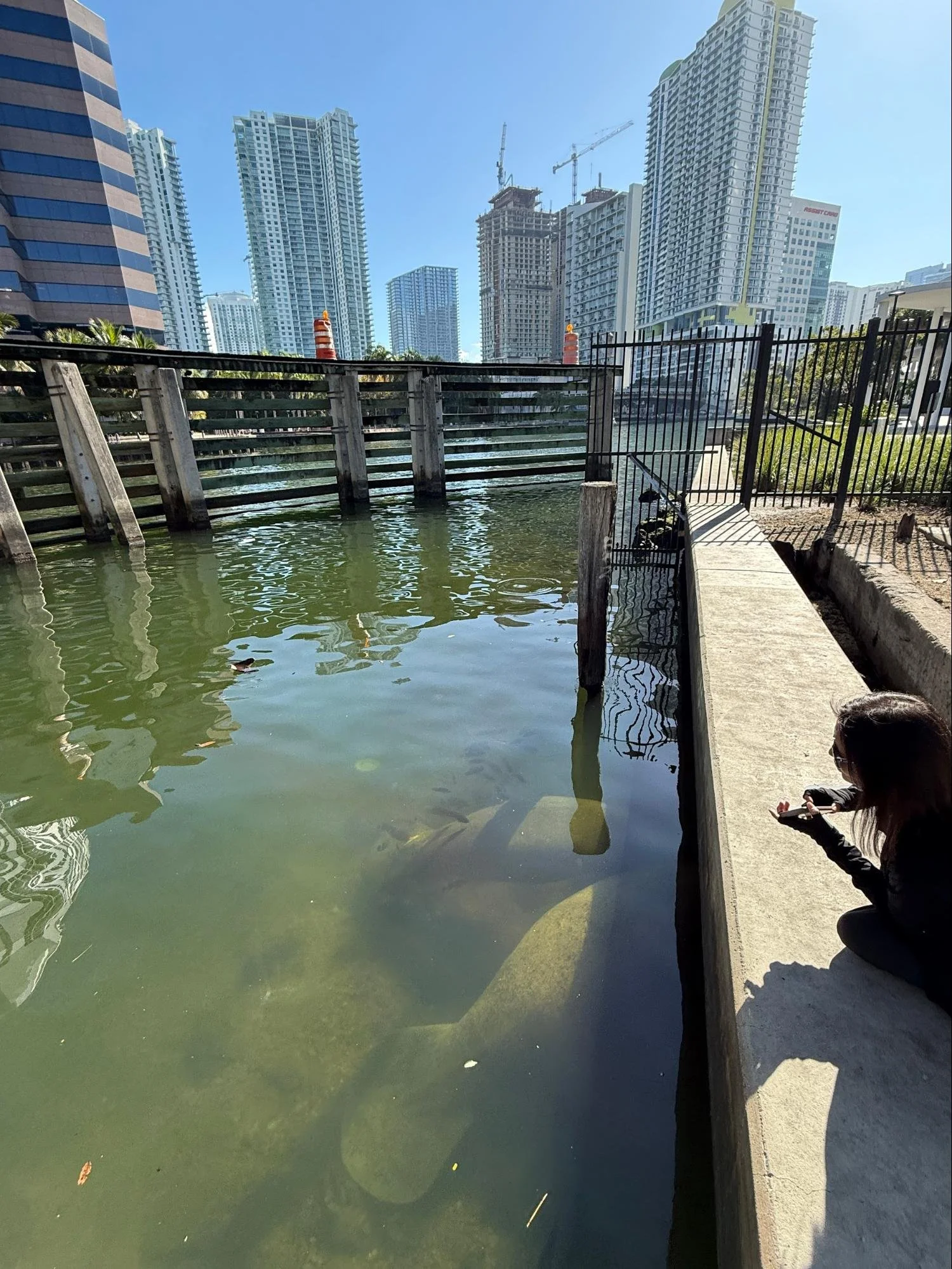
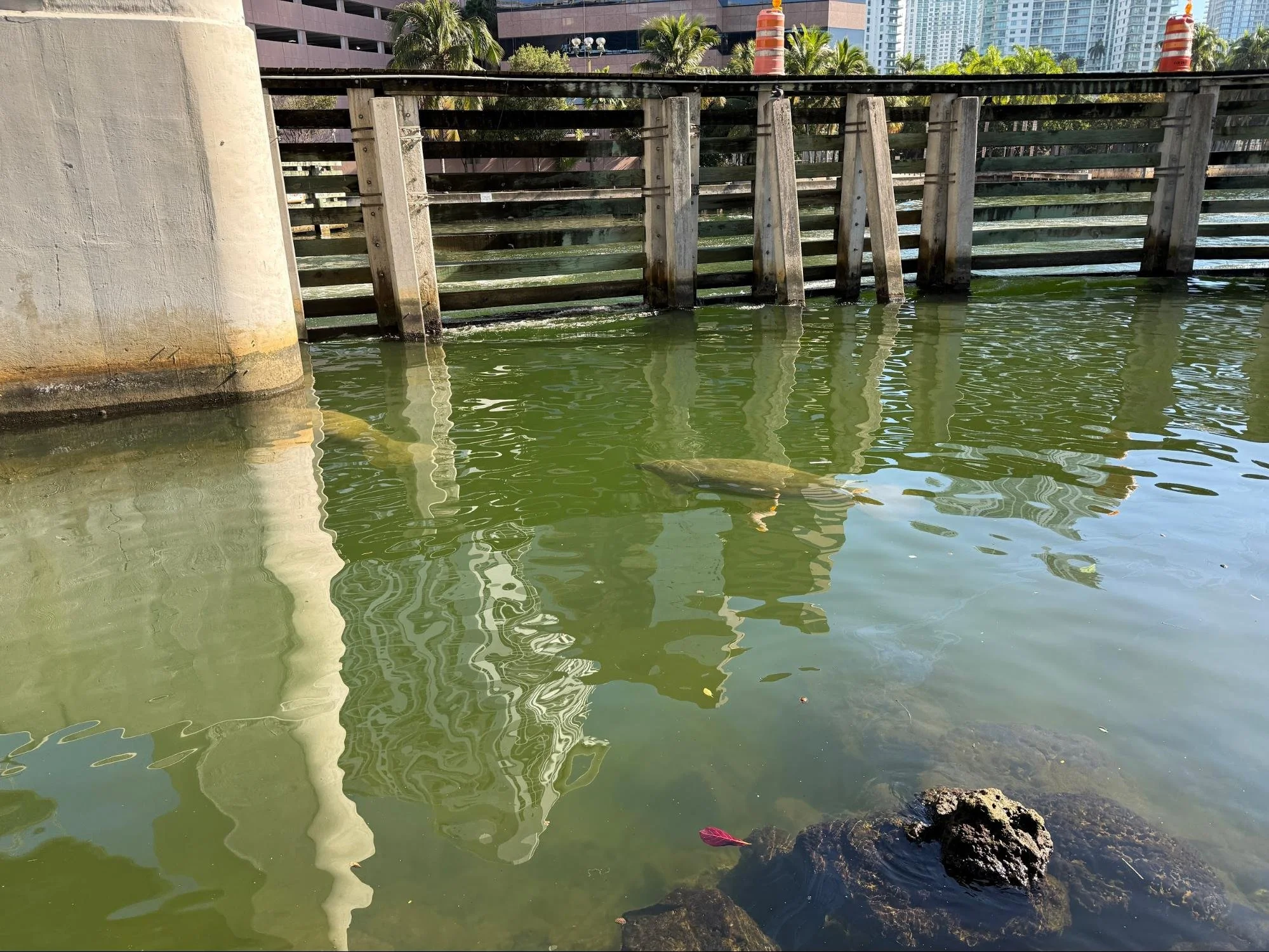
We were delighted that our park visit ended with an unexpected ecological moment: two rare manatees appeared along the shoreline! The animals were drawn to a freshwater spring emerging beneath a sidewalk retaining wall, while a nearby wooden maritime traffic deflector provided shelter from passing boats. A visible propeller scar on one of the manatees was a stark reminder of how frequently these gentle giants are impacted by boats, highlighting the need for integrating wildlife protection and passage into more effective transportation design.
Tour Stop 3. Cooling Center/Resilience Hub - José Martí Park
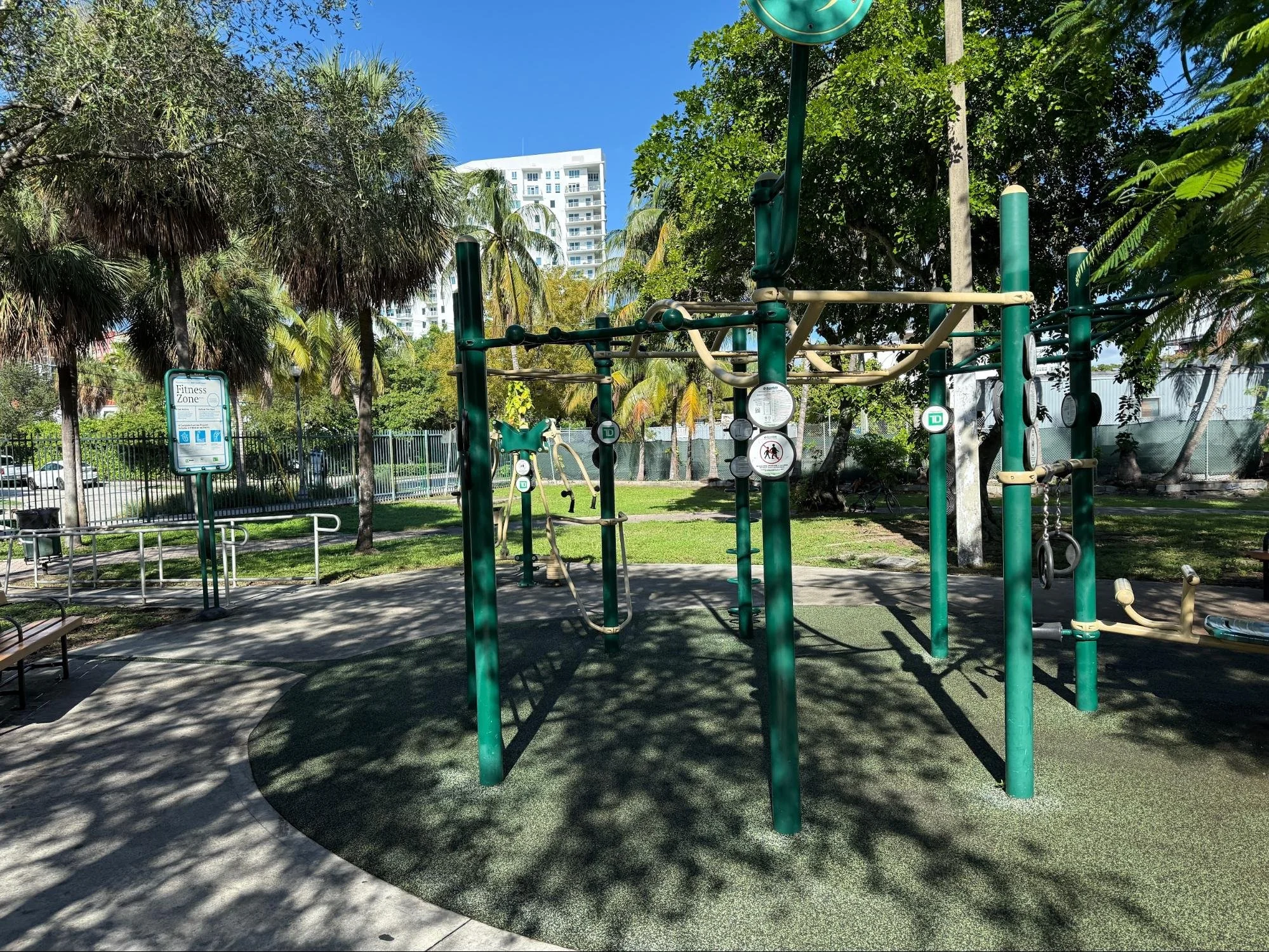
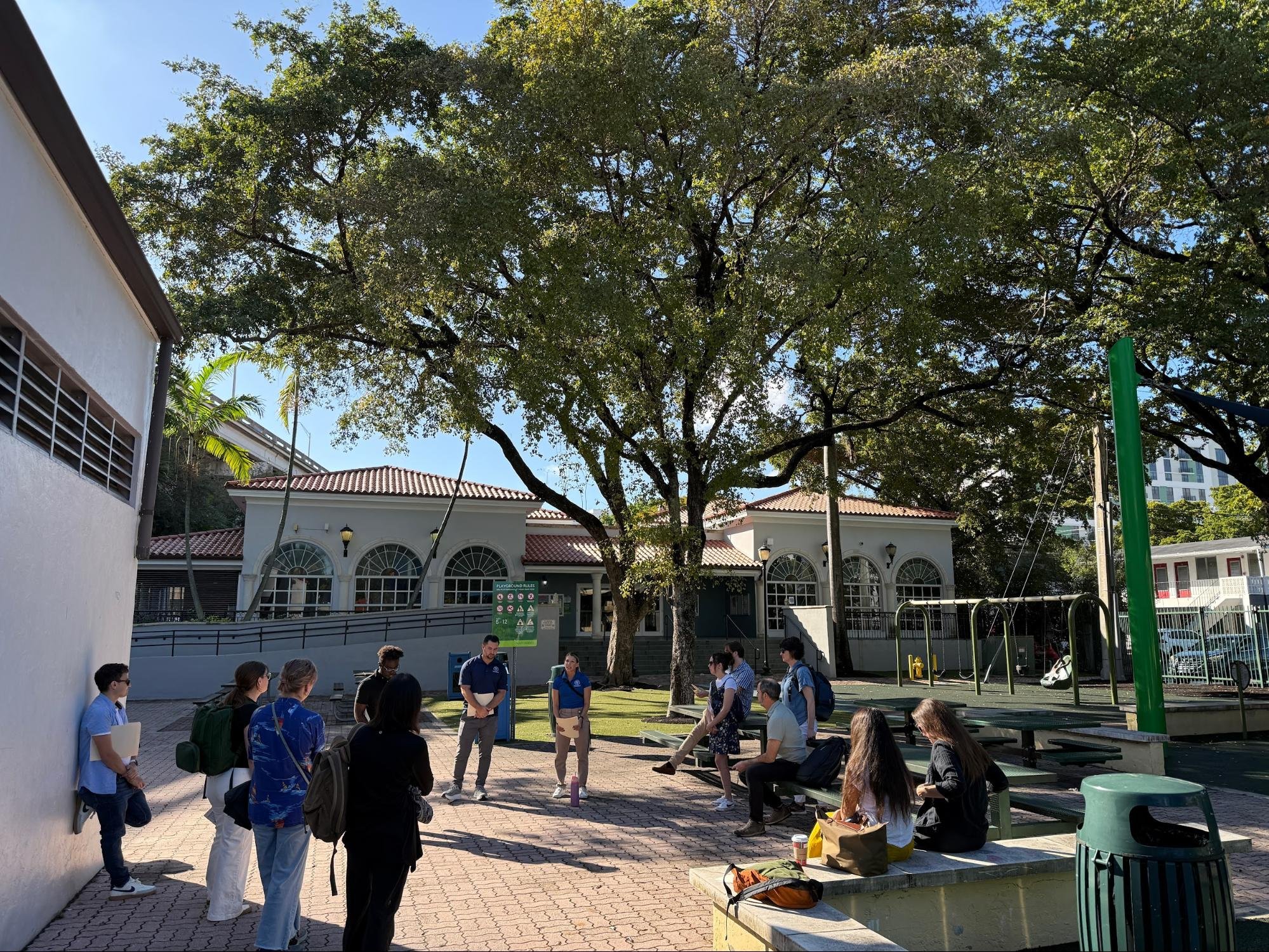
With heat indexes reaching 112 degrees in 2024, and extreme heat being the leading cause of weather related deaths in the United States, Miami has taken steps to ensure its residents have cool places to sit, refill water bottles, and information, including heat health awareness literature. The recreation center, located between the Blue Street and park redesign projects, serves as a Cooling Center during major heat waves and will eventually be retrofitted as a Resilience Hub for post-disaster recovery. The park already offers social programming such as children’s camps, after-school care, swim lessons and gym access, making it a well utilized destination. Other elements of the redesign will include layering in critical disaster preparedness and recovery services alongside these existing programs. The park redesign also aims to increase surrounding tree canopy by 15% and install a vegetated green corridor between surrounding schools and the park. Additional vegetation plays a key role in mitigating urban heat island effects and reducing flood risk Miami piloted its cooling center program at three locations in 2024 and expanded to 10 park facilities in 2025, all within close proximity to disproportionately heat-impacted neighborhoods.
We were impressed with Miami’s approach to integrated flood management, heat relief, and community-based disaster recovery services into one coordinated strategy. This strategic stacking of benefits in trusted spaces can accelerate implementation and impact. For anyone working at the intersection of restoration and urban resilience, this is a replicable blueprint that is pragmatic, integrated, and action-oriented. After all, resilience investments stand to deliver the most value when they strengthen the natural areas and public facilities communities already depend on and care about.
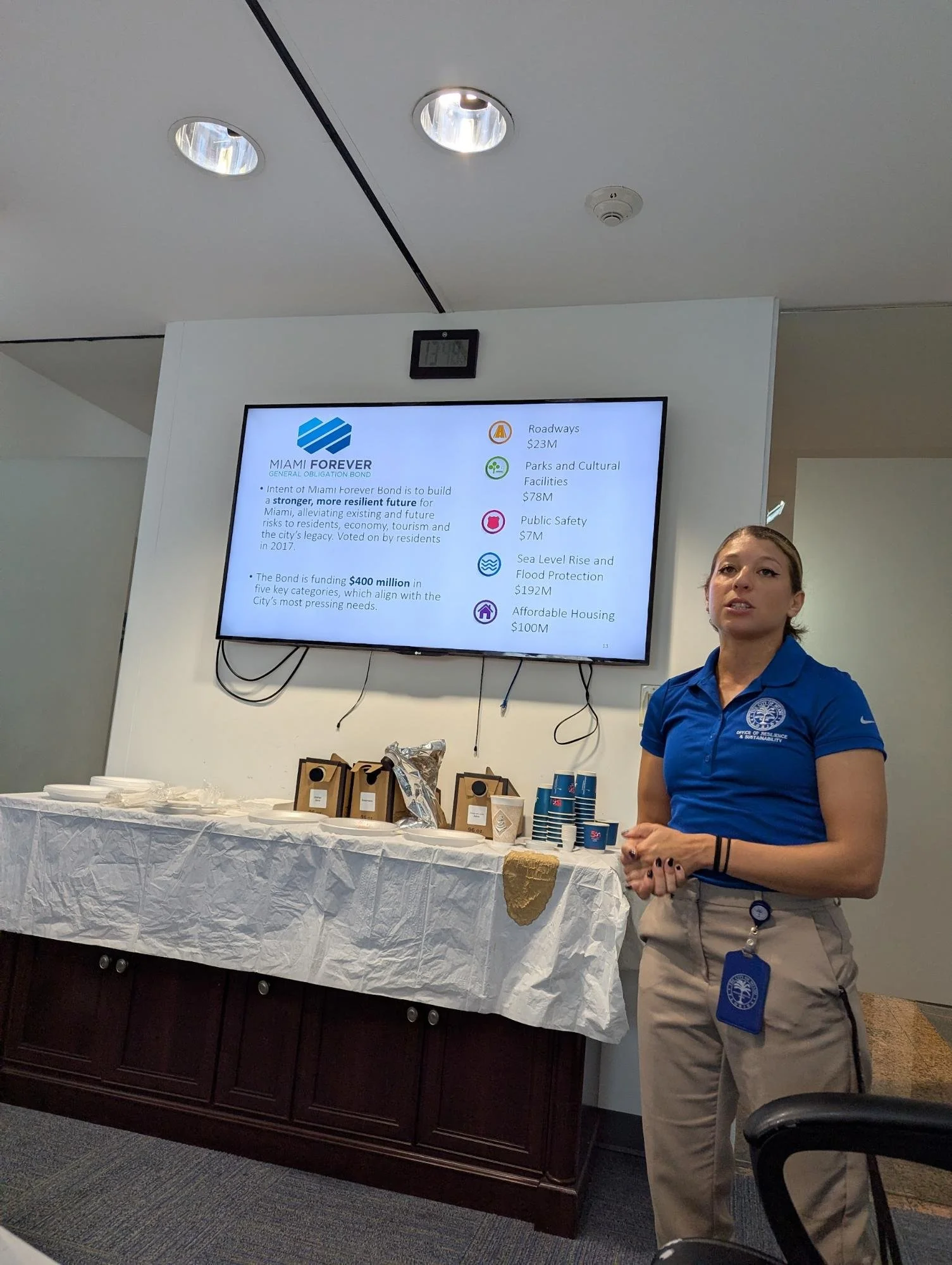
Finally, we were treated to an inspiring presentation by Allisa Farina, Assistant Chief Resilience Officer, showcasing the evolution of the City’s resilience office, planning, and strategic plans. She described how her team is designing for the Miami of the Future by building a public public infrastructure to withstand a specific threshold of flooding and sea level rise. Some of this work is governed by local codes and land-use regulations, others are in accordance with new laws implemented at the state level. We were excited to learn that Miami integrates adaptive management into how it plans and funds capital projects. This allows the city to increase infrastructure resilience based on available resources, with the option to add interventions later as risks evolve and as funding becomes available. These are the kinds of innovations that can speed and scale resilience at the pace needed.
Seeing these projects in action and hearing directly from the experts was invaluable. A huge thank you to Allisa, Tim, and Reinaldo for sharing their knowledge and showing us the future of resilient urban planning!
Team Building and Strategy Development
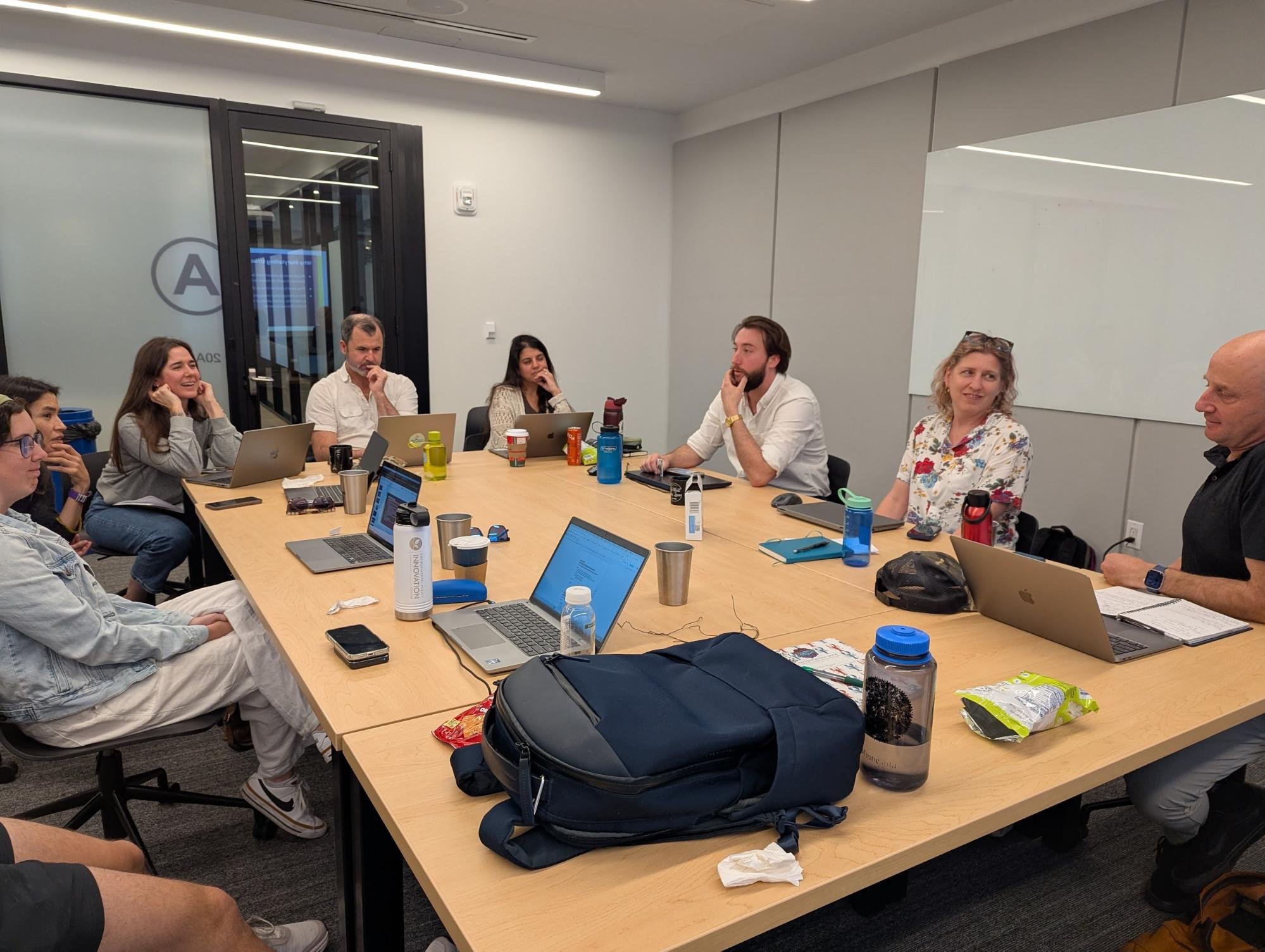
Day two of the retreat shifted from field exploration to team building and strategic reflection. Gathering in a shared WeWork space gave the team a rare opportunity to work face to face, strengthen connections, and advance several important conversations that are shaping EPIC’s direction.
We focused on refining our shared theory of change: how we communicate what we do, why it matters, and how our work connects across water, infrastructure, restoration, and community outcomes. The discussion reinforced the importance of clear storytelling, especially in bridging technical work with broader audiences, and highlighted the human dimension of restoration: creating meaningful jobs, restoring damaged landscapes, and supporting communities navigating economic and environmental transition. Stories from Appalachia, where former coal workers are now restoring damaged streams, underscored how policy, jobs, and ecological recovery are deeply linked. We also reflected on the role EPIC can play as a connector—bringing together practitioners, agencies, and sectors that don’t always speak the same language.
In the afternoon, the conversation turned toward strategic expertise, partnerships, and long-term growth. We explored how thoughtful partnerships can amplify impact—not just through joint projects or funding opportunities, but by telling a more complete story about how infrastructure, restoration, and resilience can work together. There was an emphasis on EPIC playing a greater convening role, fostering collaboration across organizations, disciplines, and regions, and investing in relationship-building as a core part of our work.
The day also included candid conversations about fundraising and storytelling: understanding what motivates funders, aligning project concepts with shared values, and clearly articulating what makes EPIC distinct - particularly our focus on moving restoration and resilience projects forward with urgency and efficiency. These discussions reinforced that trust, transparency, and long-term relationships are as critical as technical excellence.
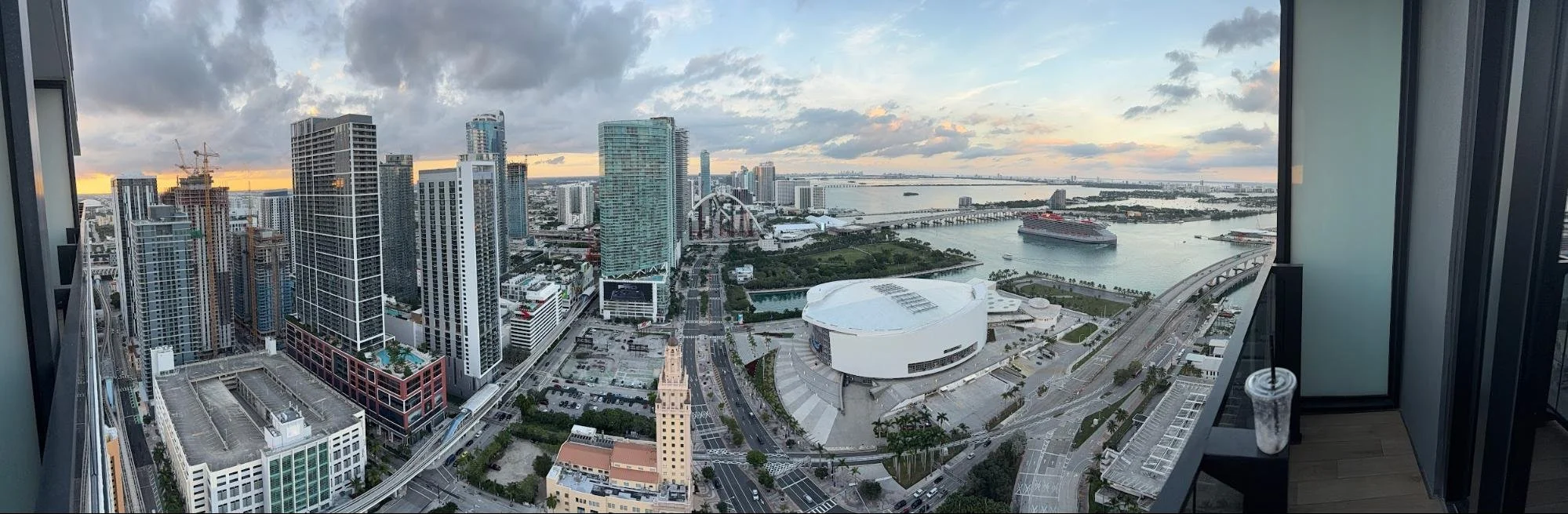
Our retreat wrapped up with an evening visit to South Beach, where our team soaked their toes in the water (some unexpectedly splashed!), explored the vibrant scene, and indulged in Cuban cuisine.
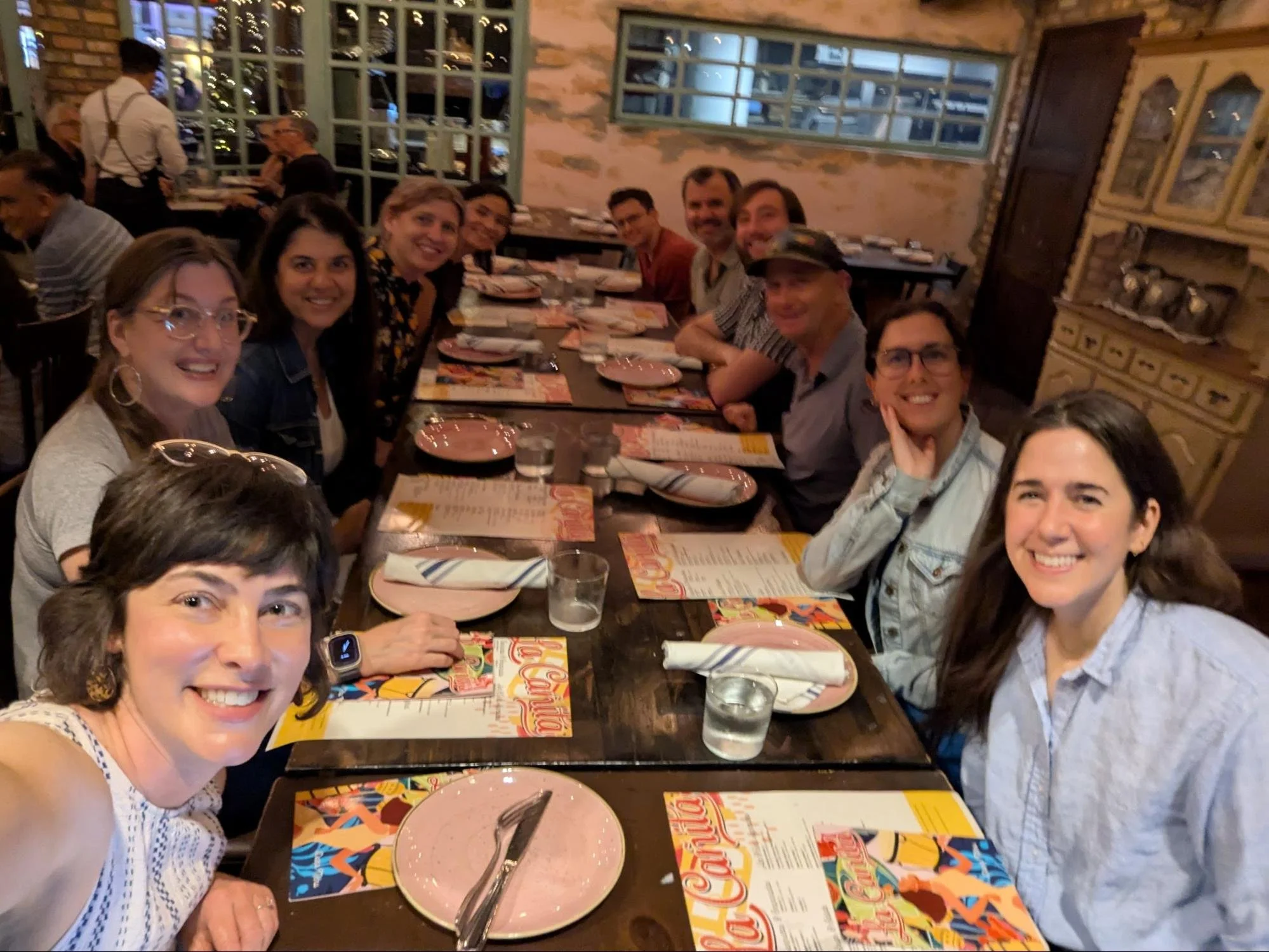
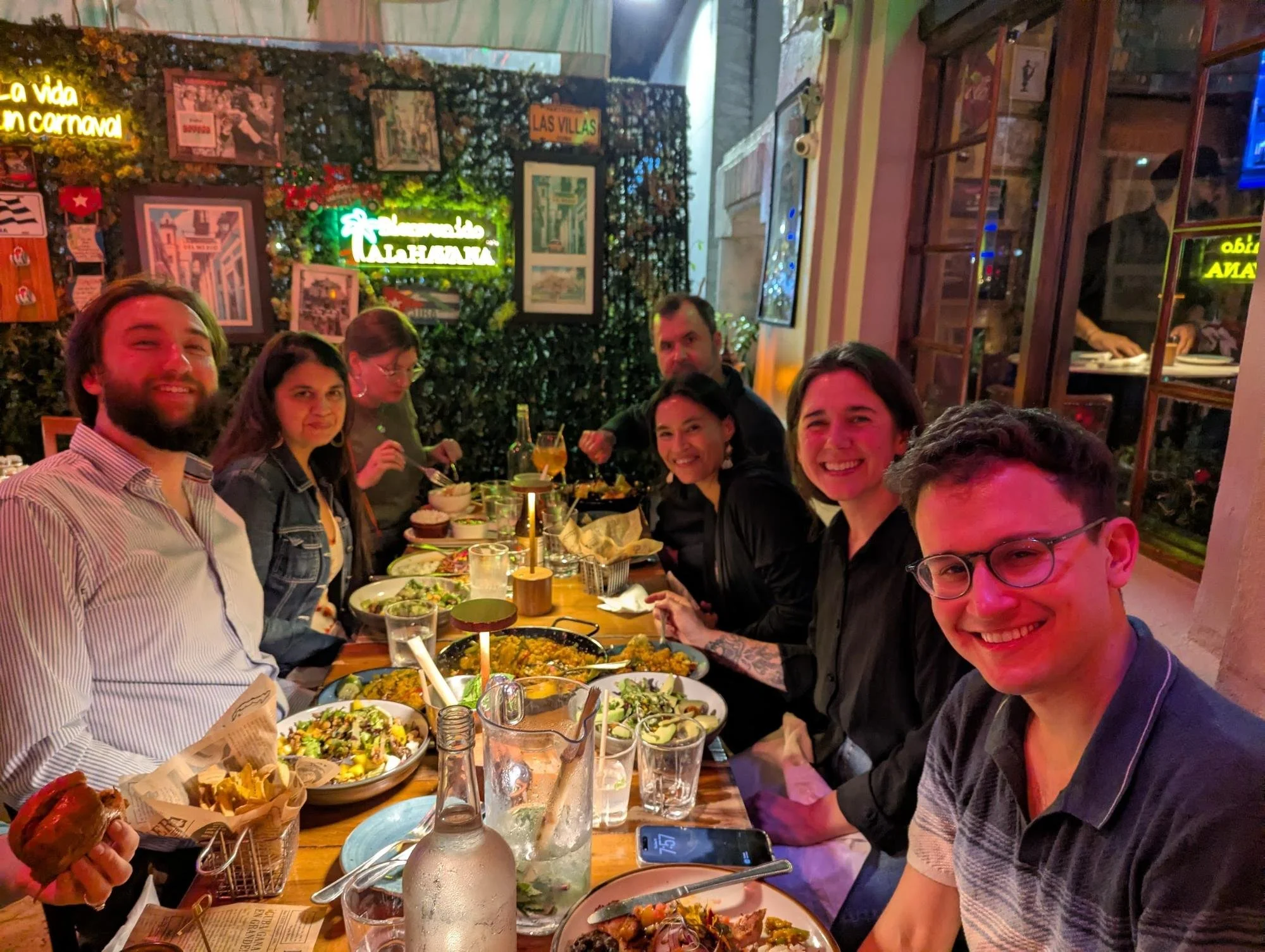
It was a fitting close to two days of learning, collaboration, and reflection that reinforced the value of coming together in person to strengthen relationships, sharpen our strategy, and return to our work energized and aligned around a shared purpose.