How water service boundary data advances environmental justice and climate resilience   
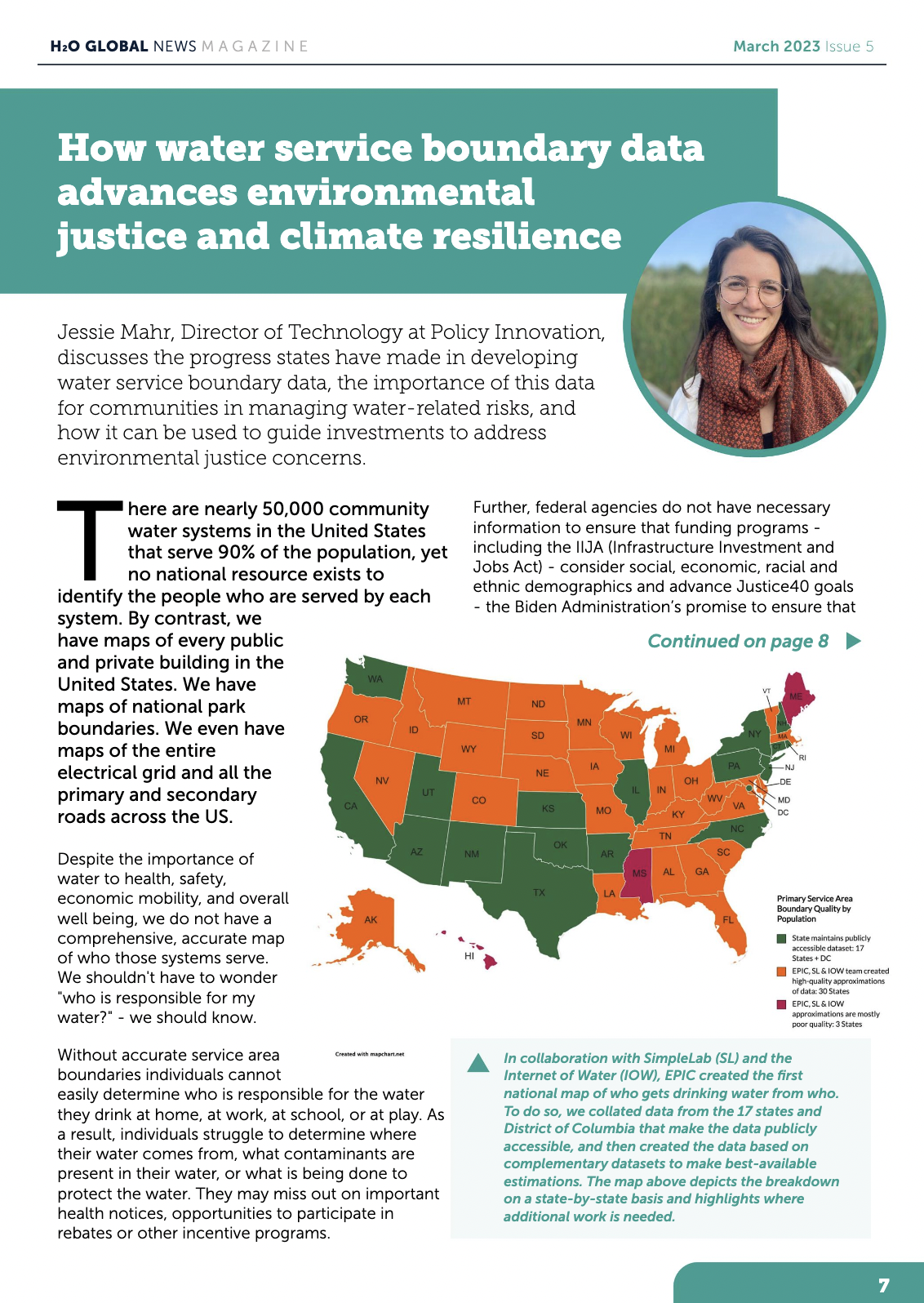
 

H2O Global News published an article in their Fifth Issue written by Director of Technology, Jessie Mahr. This article covers the progress states have made in developing water service boundary data, the importance of this data for communities in managing water-related risks, and how it can be used to guide investments to address environmental justice concerns.

Read the Article
Jessie Mahr

Jessie is the Director of Technology at EPIC. Prior to joining EPIC, she led business development and strategy for Upstream Tech, a technology start-up that uses satellite imagery to monitor and evaluate natural resources. She has also worked on programs related to regional planning for wetlands restoration and urban climate change resilience for the Massachusetts Division of Ecological Restoration and Stantec. Jessie holds a Master of Science in Water Resource Engineering and Environmental Policy from Tufts University, and a Bachelor of Arts in Geography from The University of Texas.

Previous
Previous

Biden-Harris Administration’s New State Funding Distribution for Replacing Lead Pipes Based on Highest Need

Next
Next

Top 5 Changes in the New GRI Biodiversity Metric