Whole Watershed, Cleaner Water: Maryland's Partnership Model You Can Copy
As Maryland considered how to step into the next phase of Chesapeake Bay restoration, policymakers realized that they needed to better coordinate the various streams of funding for improving water quality. The Whole Watershed Act created a framework, similar to a watershed financing partnership, that identifies target watersheds, concentrates funding into them, and monitors the water quality improvement. Now, other states have a model to follow that will ensure their water quality improvement dollars are spent as effectively as possible.
The History
In Maryland, committed advocates have spent decades securing funding for a variety of programs to restore the Chesapeake Bay–so much so that it can be hard to remember which program is which. The Chesapeake and Atlantic Coastal Bays Trust Fund is different from the Bay Restoration Fund. The Agriculture Water Quality Cost-Share Program might sound similar to the Clean Water Commerce Program, but they’re administered very differently by separate agencies.
Each has its role to play in safeguarding the national treasure. But a bombshell report that came out in advance of a key Chesapeake Bay cleanup goal made waves by proclaiming “Additional funding of existing implementation efforts is unlikely to produce the intended nutrient reduction outcomes.” Something had to change.
The report provided many opportunities for improvement, but one that resonated with Maryland legislators was that too often restoration projects were being spread around the state instead of coordinated to show a demonstrable difference in a particular area. The phrase I began to hear all over the capitol was “random acts of restoration”.
Chesapeake Bay discourse can easily be oversimplified to Maryland accusing Pennsylvania of not meeting its cleanup obligations, because it has much of the Bay watershed but no direct access to the water. And yet, as Maryland legislators considered how to address the “random acts of restoration” problem, they actually looked to a successful program to their north.
Precisely because the Chesapeake Bay is distant to most Pennsylvanians, organizations on the ground realized that they needed to provide a more tangible goal: rapidly removing streams from the list of impaired waterways.
To do this, NGOs, like Lancaster Clean Water Partnership and the Chesapeake Conservancy, identified discrete stream segments where intervention could make a significant difference, secured funding from a variety of sources, and–working with the community–targeted those investments to where they’d have the biggest impact. Then, they measured the improvement and watched as streams like Turtle Creek in Union County were made clean enough to be “delisted.”
Back in Maryland, legislators created a program intended to replicate this success: The Whole Watershed Program.
The Program
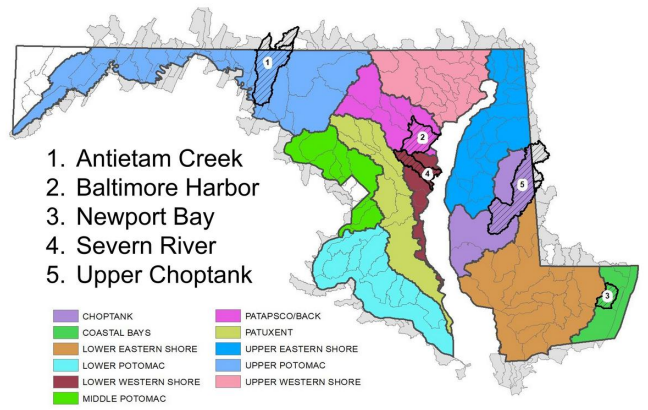
The Whole Watershed Program aims to “provide a collaborative, science-based approach to watershed restoration”. Informed by the CESR report, it’s meant to be targeted in its approach to reducing nutrient impairments, but also provide public access benefits to people and habitat for wildlife.
Much like the program in Pennsylvania, it has three basic steps: identifying watersheds for improvement, coordinating funding towards targeted projects within them, and monitoring the results.
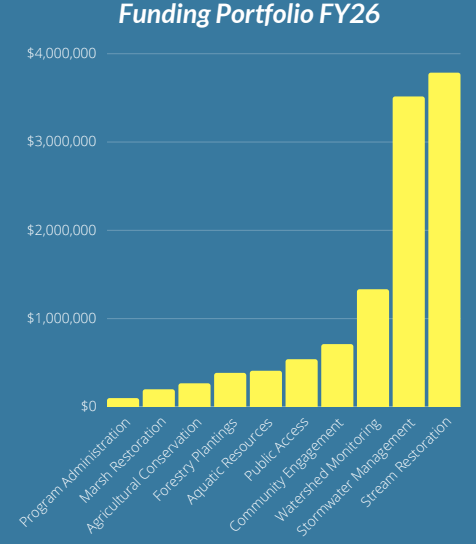
And “projects” is conceived pretty broadly. Some are on-the-ground restoration, like a half-million-dollar wetland creation, but others are a little more unconventional, such as paying Baltimore anglers $30 per invasive fish they catch and dispose of. And up to 10% is for the people power that ensures community buy-in and long-lasting engagement.
Progress at the state level is coordinated by a state management team that is housed in the Department of Natural Resources but includes representation from a half dozen state agencies.
The Progress
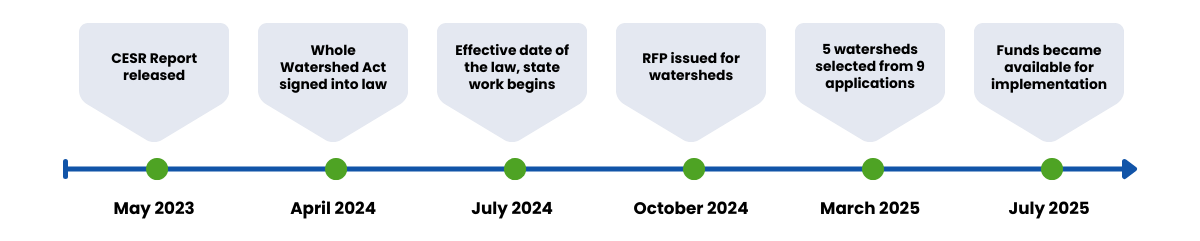
Partners have begun their initial monitoring, design, and implementation work in each of the five watersheds.
These projects range from agricultural conservation practices to urban stream restoration and include solutions that directly uplift communities while improving water quality.
A more detailed report on the first year of implementation can be read here.
What are you waiting for?
States across the country are recognizing the importance of coordinating funding to maximize ecological uplift. Maryland provides one example of doing so legislatively that so far is making progress and receiving positive feedback.
A similar approach could be taken by the executive branch or by NGOs agreeing to work collaboratively. If your state is considering how to improve its nonpoint water quality work, consider reaching out to Harry Huntley, EPIC’s Agriculture Policy Lead to discuss how you could set up a watershed financing partnership structure like this.
Thanks so much to the administrators and implementers who were interviewed for this publication!